Table of Contents
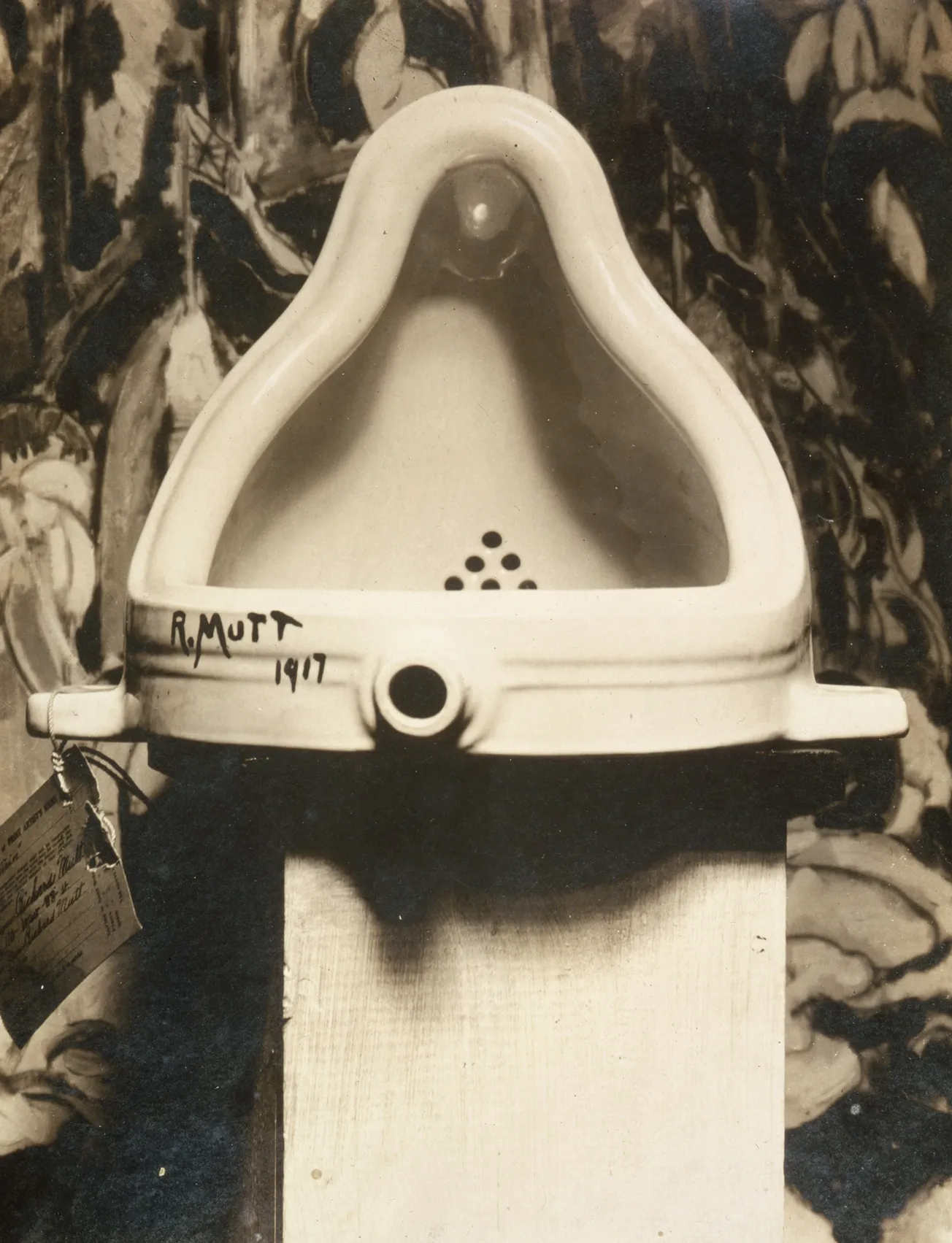
Picture this scene: It's 1917, and a porcelain urinal arrives at the Society of Independent Artists exhibition in New York. Signed "R. Mutt" and titled *Fountain*, it's promptly hidden from view by scandalised organisers. The artist, Marcel Duchamp (hiding behind a pseudonym) has just detonated a bomb under the art establishment. Over a century later, we're still feeling the aftershocks.
This April, MoMA unveils the first comprehensive Duchamp retrospective in over half a century, assembling nearly 300 works that trace how one artist fundamentally rewired our understanding of creativity. For educators grappling with students who ask "But why is this art?" while scrolling through AI-generated images on their phones, Duchamp offers both the source of the question and a framework for answering it.
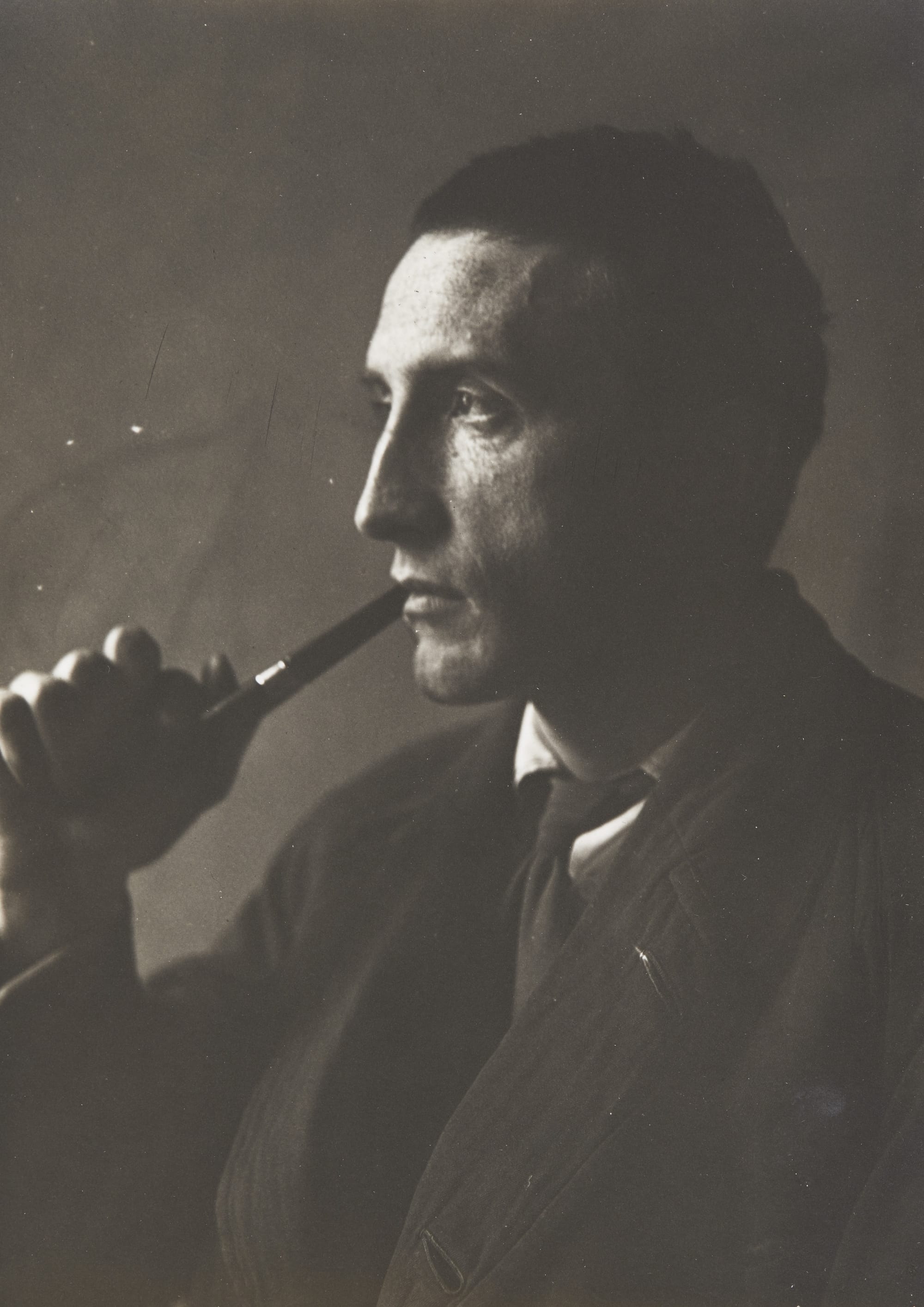
"Contemporary artworks often prompt viewers to ask, 'Why is this art?'" explains Ann Temkin, MoMA's Chief Curator of Painting and Sculpture. "It is virtually impossible to answer this question without referring to the work of Duchamp. More than any other modern artist, Duchamp challenged and transformed the very definition of an artwork."
The last time audiences could see Duchamp's work at this scale was 1973, when MoMA and Philadelphia Museum of Art co-organised what became a landmark exhibition. That show, curated by Anne d'Harnoncourt and Kynaston McShine, served as the inaugural exhibition for Philadelphia's newly established Twentieth Century Art Department—fitting, given the museum's unparalleled Duchamp holdings acquired through the Arensberg Collection.
"Scholarship mining the artist's famously enigmatic work has flourished in the intervening half-century—as have myths and misconceptions," the curators note. When Frankfurt's MMK mounted its own Duchamp retrospective in 2022, it was billed as the first of its kind in two decades. Major Duchamp exhibitions are rare, making this comprehensive survey particularly significant.
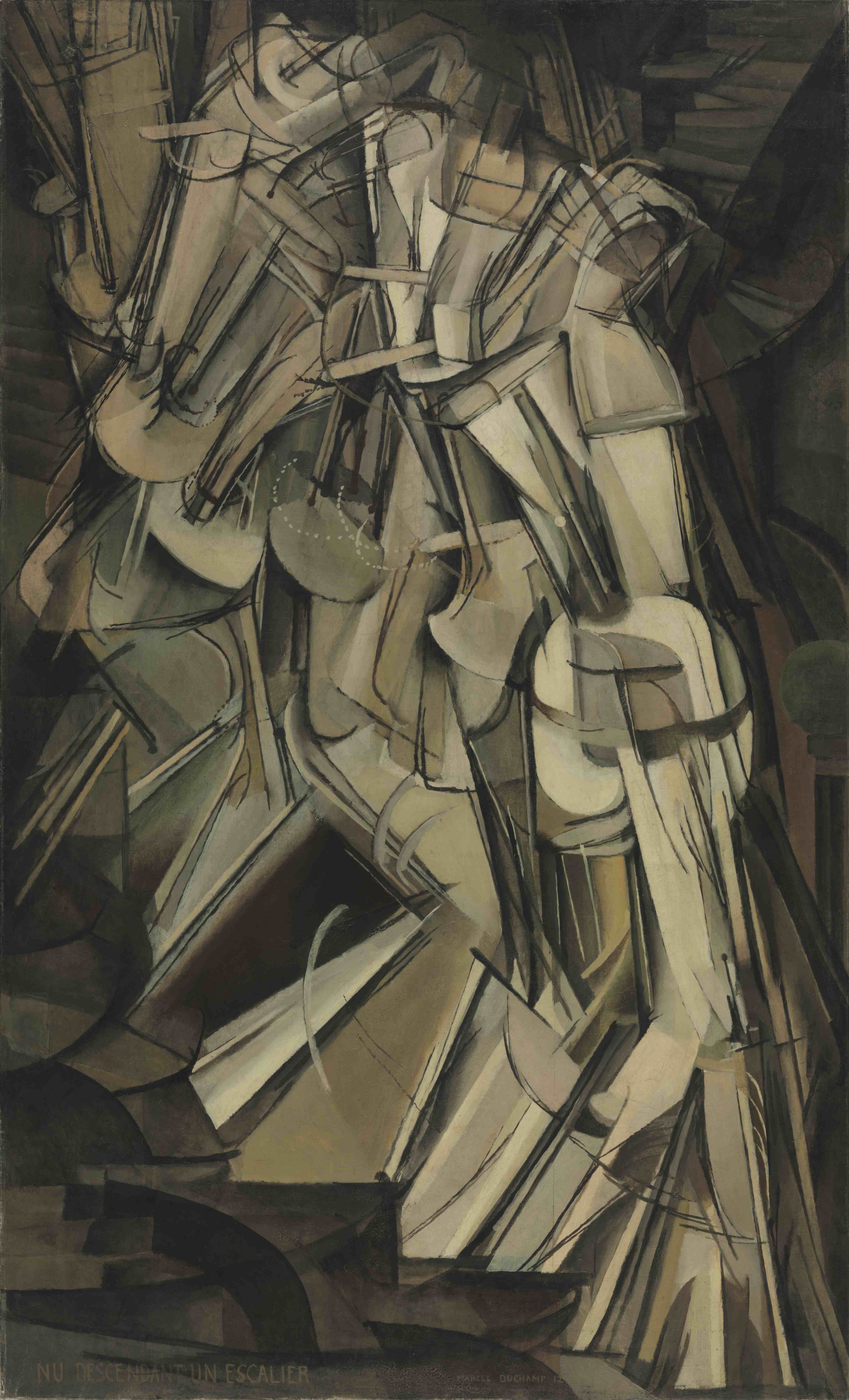
The exhibition opens with Duchamp's early experiments in painting. *Nude Descending a Staircase No. 2*, that stuttering cascade of geometric forms that scandalised the 1913 Armory Show, remains a cornerstone of the Philadelphia Museum of Art's collection. The painting's attempt to capture motion through cubist fracturing hints at Duchamp's later obsession with process, time, and mechanical reproduction.
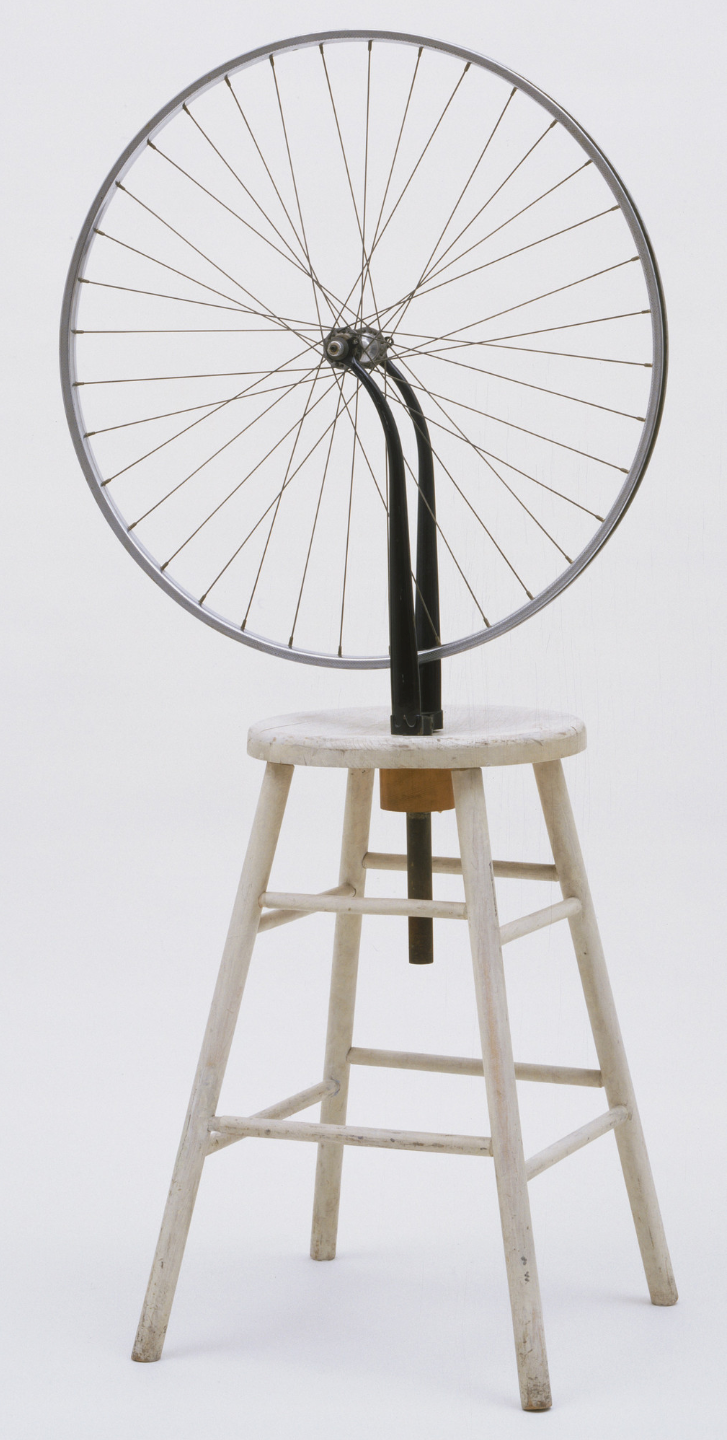
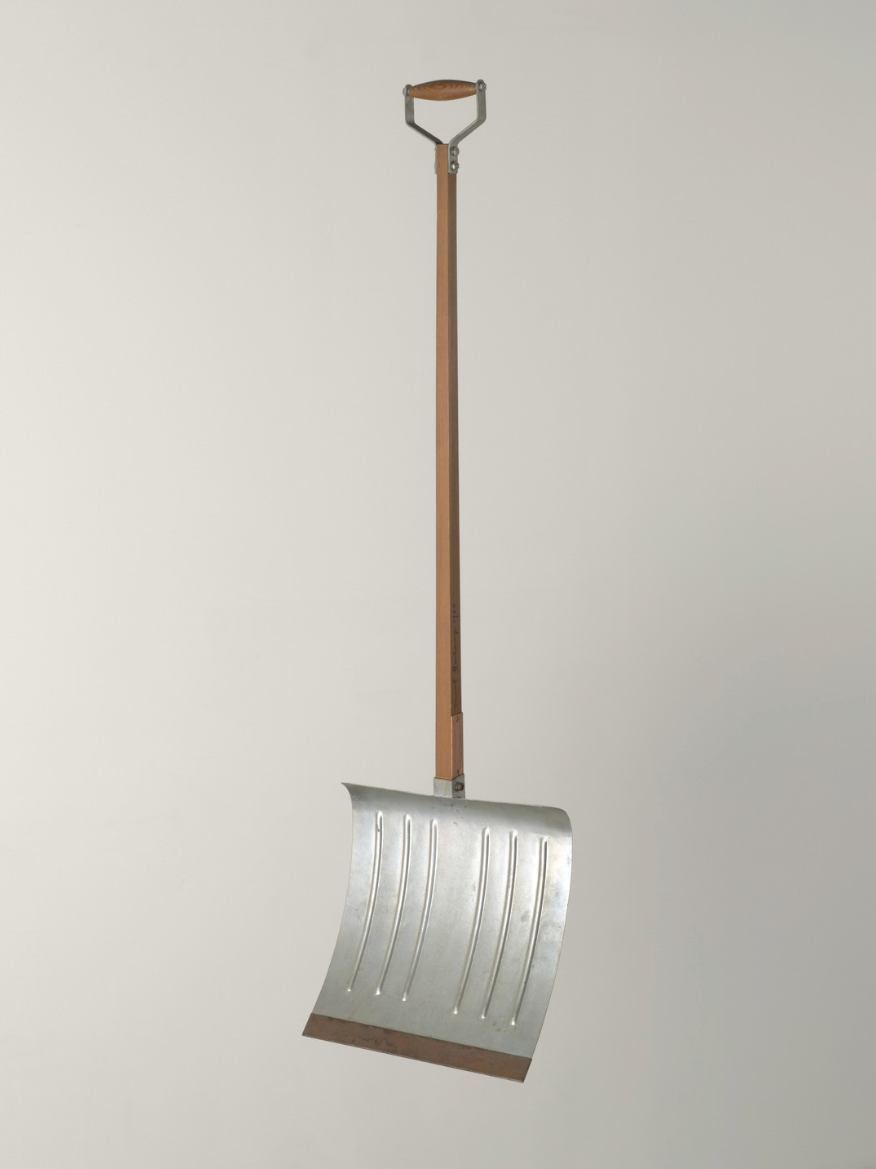
But it's the readymades—those ordinary objects Duchamp declared to be art—that revolutionised everything. A bicycle wheel mounted on a stool (1913). A snow shovel titled *In Advance of the Broken Arm* (1915). A coat rack nailed to the floor. And most infamously, that urinal. By selecting mass-produced objects and repositioning them as art, Duchamp argued that the creative act lay not in making but in choosing, not in craft but in concept.
"Duchamp's influence is incalculable," notes Michelle Kuo. "Our exhibition will foreground the ways in which Duchamp upended conventional oppositions between hand and machine, original and copy, intention and chance, and matter and idea."
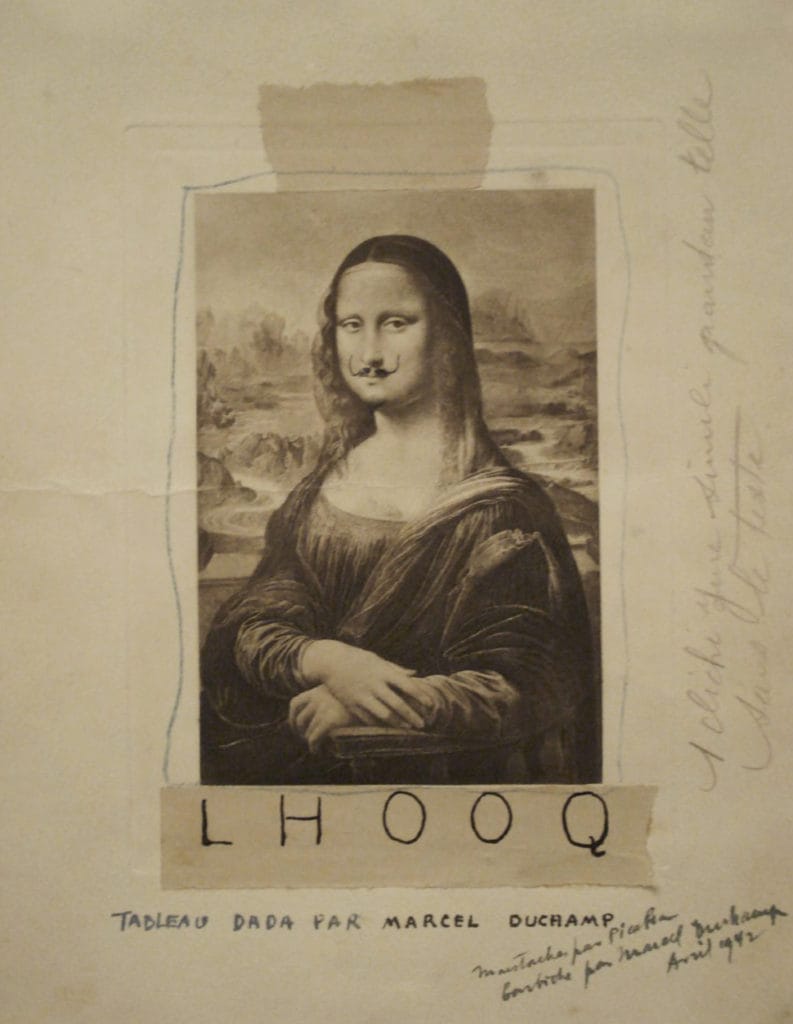
Consider *L.H.O.O.Q.* (1919), where Duchamp drew a moustache and goatee on a cheap reproduction of the Mona Lisa. The title, when pronounced in French, sounds like "elle a chaud au cul" (she has a hot arse). It's juvenile, irreverent, and brilliant—simultaneously deflating high culture's pretensions while creating a new artwork through minimal intervention. Today's meme creators are Duchamp's descendants, whether they know it or not.
The exhibition also showcases Duchamp's *Box in a Valise*, a leather case containing 69 miniature replicas of his works. Created during World War II as Duchamp fled Europe, these portable museums raise prescient questions about originality, reproduction, and value. If Duchamp himself made the replicas, are they authentic artworks or mere copies? The question feels particularly urgent in our age of NFTs and digital reproduction.
Matthew Affron, curator at Philadelphia Museum of Art where the show travels next, emphasises how Duchamp's transatlantic life shaped his radical approach. "It was important for him, this going back and forth. It was part of who he was and how he chose to have his career unspool. So any complete retrospective of Duchamp is going to have to tell the story of his transatlantic life."
That mobility extended beyond geography. Duchamp created an entire female alter ego, Rrose Sélavy (a pun on "Eros, c'est la vie"), complete with photographs by Man Ray. This gender play, like his readymades, questioned fixed categories and stable identities—ideas that resonate powerfully with contemporary discussions about gender fluidity and performed identity.
"Duchamp remains mysterious," reflects Kuo. "The totality of his oeuvre still isn't well known. What is talked about most often represents only a fraction of his work, and his diverse body leaves much to be investigated."
For educators, the exhibition offers rich pedagogical possibilities. Primary students might explore Duchamp's visual puns and wordplay, discovering how language and image intertwine. His readymades provide perfect prompts for found-object sculptures, while his chance operations (like dropping threads to determine composition) can introduce young artists to aleatory processes.
Secondary students can grapple with meatier questions. Does artistic skill matter if the idea is strong enough? How does context change meaning—is a urinal in a bathroom the same object as a urinal in a gallery? What happens when anyone can declare anything art? These aren't just historical curiosities but urgent contemporary concerns as students navigate Instagram, TikTok, and AI-generated imagery.
"Duchamp's work explores the importance of chance, questions of skill and deskilling, the art market, the role of the human and the machine, and the definition of originality and authorship," Temkin elaborates. Each of these themes offers a bridge between historical avant-garde practices and contemporary creative life.
Naomi Beckwith, Chief Curator at the Guggenheim, argues that Duchamp's influence extends far beyond conscious homage. "Duchamp may not be on the lips of many artists, over a century after his revolutionary moves in the art world, but he is in their subconscious. Whenever an artist makes a gesture and calls it art, or refuses traditional material, or proclaims that their ritual, their event, their gathering or whatever they do as an artist, is art, they are quoting Duchamp."
The exhibition design itself promises to be pedagogically useful. Rather than a chronological march, the curators have organised works thematically, allowing visitors to see how Duchamp circled back to ideas throughout his career. A section on chance operations might include both his thread pieces and his elaborate notes on random procedures. The readymades will be contextualised not as isolated pranks but as part of a sustained investigation into authorship and authenticity.
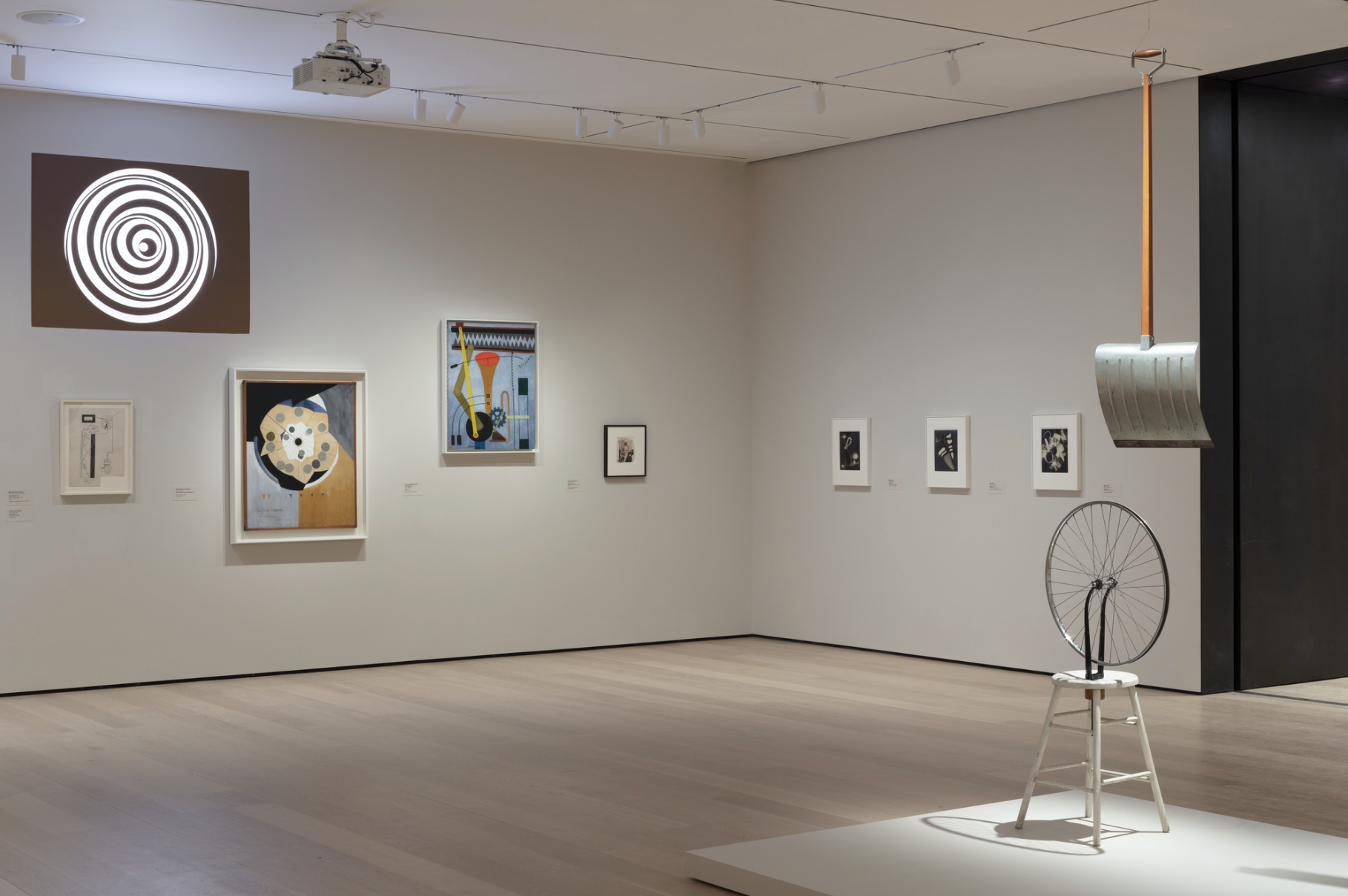
The travelling exhibition will not include two major works permanently installed in Philadelphia: *The Large Glass* (*The Bride Stripped Bare by Her Bachelors, Even*) and Duchamp's final work, *Étant donnés*. But with nearly 300 other works on view, including paintings, sculptures, photographs, films, and archival materials, there's ample material to fuel classroom discussions.
The exhibition runs from April 12 to August 15 at MoMA's Steven and Alexandra Cohen Center before travelling to Philadelphia Museum of Art (October 2026-January 2027) and Paris's Grand Palais (Spring 2027). For educators planning field trips or virtual visits, MoMA typically offers extensive educational programming around major exhibitions.
As students encounter Duchamp's readymades, they'll inevitably ask why a urinal or bicycle wheel counts as art. The answer isn't simple, but that's precisely the point. Duchamp didn't solve the problem of defining art—he made it productively unsolvable. In our current moment, when anyone with a phone can be an image-maker and AI can generate "art" in seconds, Duchamp's questions feel more relevant than ever.
"Duchamp changed the very definition of the artist," Kuo concludes. A century later, we're all living in the world his readymades made. One where thinking can be as creative as making, where context transforms meaning, and where the question "But is it art?" is always worth asking, or better; "Is art the thinking bit or the doing bit ...".