Table of Contents
Art Minute
Botanicus Fantasticus (preview)
| Title: | Mark Schaller - Botanicus Fantasticus |
| Duration: | 11:00 |
| Year: | 2020 |
| Director/DOP: | Peter M Lamont |
| Music: | Rosie Westbrook & Sean Kelly |
| Cameras: | Lumix S5, iPhone 12Pro, Mavic Mini |
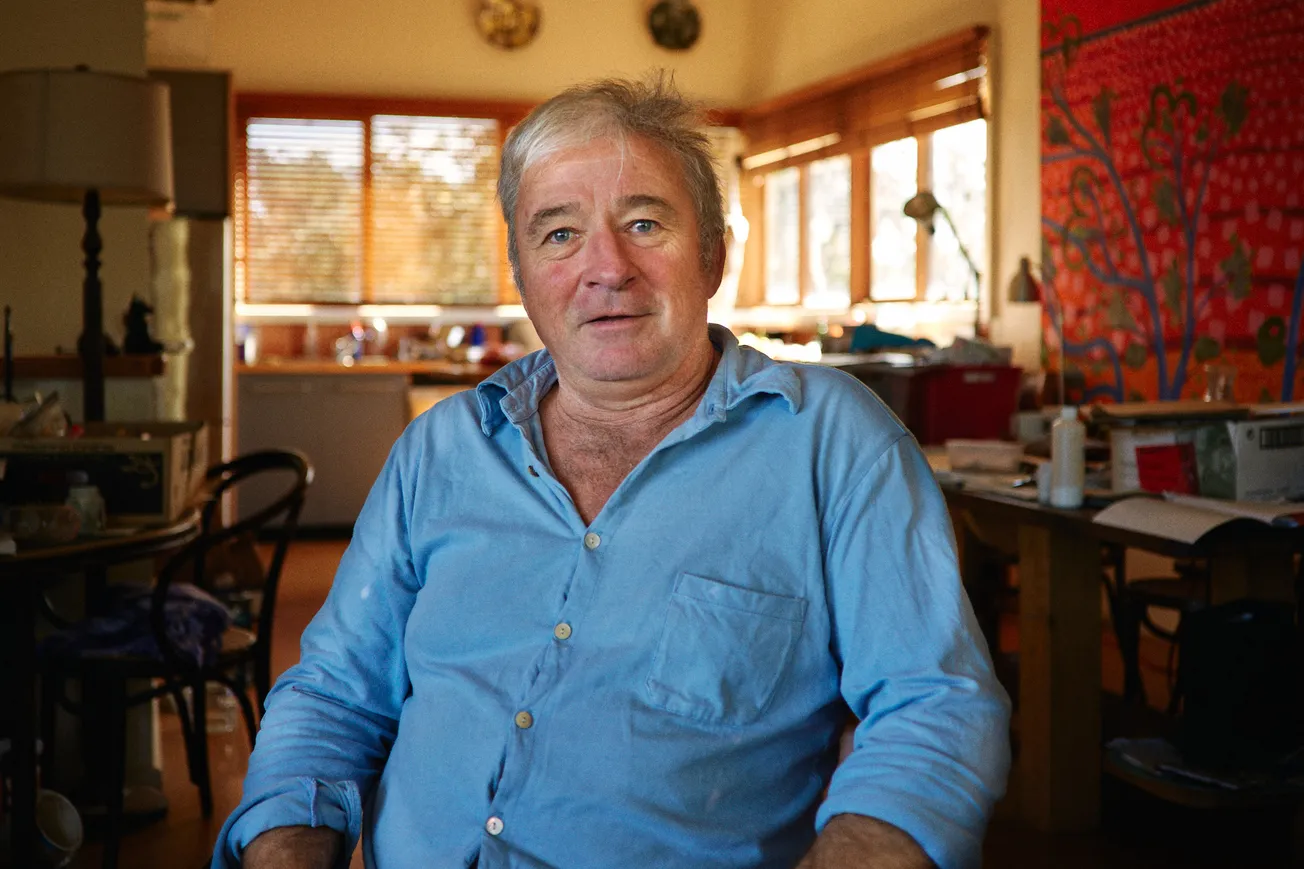
About Mark Schaller
Early Life and Background
Born in Hamburg, West Germany, in 1962, Mark Schaller immigrated to Australia at a young age, settling in Melbourne, Victoria. This early relocation exposed him to diverse cultural influences, which later permeated his artistic practice.
Artistic Development and Education
Schaller pursued formal art education at the Victorian College of the Arts, where he studied fine arts with a focus on painting. In the early 1980s, he became a founding member of Roar Studios, a Melbourne-based artist collective known for its emphasis on expressionism and primitivism. This collective provided a platform for Schaller to develop his distinctive style and engage with a community of like-minded artists.
Major Works and Exhibitions
Throughout his career, Schaller has held numerous solo exhibitions both in Australia and internationally. Notable exhibitions include his 2019 solo show at Nanda\Hobbs Contemporary in Sydney, where he presented a series of works exploring urban landscapes. His art has been acquired by major institutions, including the National Gallery of Australia in Canberra and the National Gallery of Victoria in Melbourne, underscoring his significant contribution to the Australian art scene.
Style and Technique
Schaller's work is characterised by a bold and expressive use of colour and form. He employs a variety of materials and techniques, often integrating elements of sculpture, glass, ceramics, and printmaking into his practice. His paintings frequently depict urban and natural landscapes, rendered with dynamic brushwork and a vivid palette that conveys a sense of movement and energy. Schaller's inventive approach to materials and his limitless curiosity drive his continually evolving artistic practice.
Legacy and Influence
As a founding member of Roar Studios, Schaller played a pivotal role in the development of Melbourne's contemporary art scene in the 1980s. His innovative use of materials and expressive style have influenced a generation of Australian artists. Schaller's works are held in major public and private collections, reflecting his enduring impact on the art world.
References
- Mark Schaller - Nanda\Hobbs Contemporary
- Mark Schaller - & Gallery Australia
- Mark Schaller - eastbourneart.com