Table of Contents
Art Minute
Deborah Williams - 2023
| Title: | Deborah Williams |
| Duration: | 07:00 |
| Year: | 2023 |
| Director/DOP: | Peter M Lamont |
| Music: | Peter M Lamont |
Deborah Williams - 2011
| Title: | Deborah Williams |
| Duration: | 05:19 |
| Year: | 2011 |
| Director/DOP: | Peter M Lamont |
| Interviewer: | Michel Lawrence |
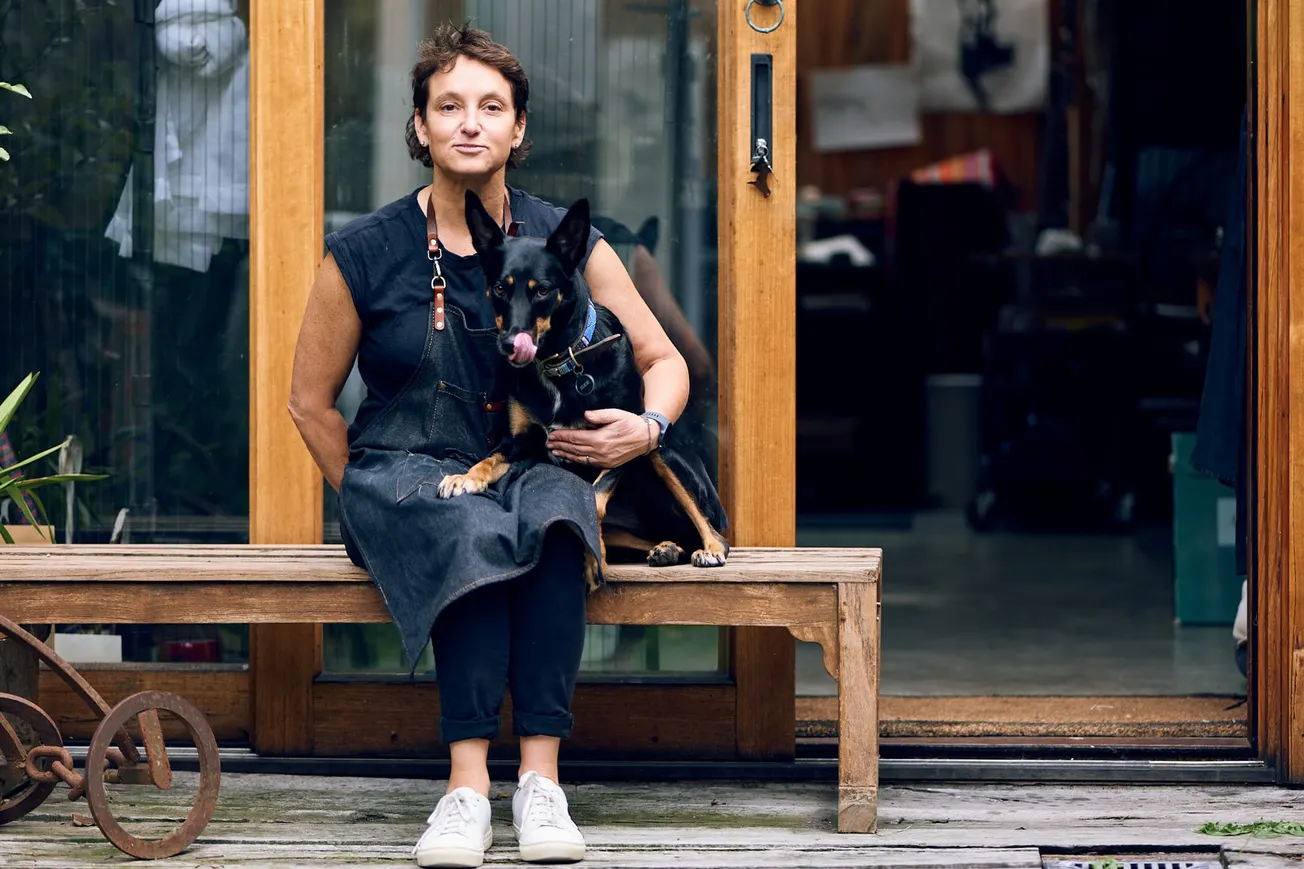
About Deborah Williams
Early Life and Background
Born in Melbourne in 1967, Deborah Williams developed an early interest in visual arts, particularly printmaking. Her formative years in Melbourne, a city with a rich artistic heritage, provided a fertile environment for her burgeoning creativity.
Artistic Development and Education
Williams pursued formal art education at Victoria College, Melbourne, earning a Bachelor of Arts in Printmaking between 1987 and 1989. She furthered her studies with a Diploma of Education from the University of Melbourne's Hawthorn Institute in 1991 and a Bachelor of Arts (Honours) in Fine Art from RMIT University in 1994. Her commitment to printmaking culminated in a Master of Fine Arts by Research at the National Art School in Sydney, completed between 2006 and 2011.
Major Works and Exhibitions
Since her first solo exhibition in 1993, Williams has consistently showcased her work across Australia and internationally. Notable exhibitions include 'It is at eye level where I aspire to be' at Australian Galleries, Sydney, in 2024, and 'Stray shadows' at Australian Galleries, Melbourne, in 2022. Her works have been acquired by prominent institutions such as the National Gallery of Australia, the Art Gallery of New South Wales, and the Portland Art Museum in Oregon, USA.
Style and Technique
Williams is acclaimed for her print-based practice that delves into the representation of dogs in contemporary culture. Her work ranges from metaphoric and anthropomorphic portrayals to explorations of cultural attitudes toward dogs and the concept of pet ownership. Employing techniques like intaglio, drypoint etching, and large-scale inkjet prints, she captures the essence of canines, often depicting them in commanding poses that reflect their intrinsic nature.
Legacy and Influence
Williams' dedication to printmaking and her unique focus on canine subjects have significantly contributed to contemporary Australian art. Her works are included in numerous public and private collections, both nationally and internationally, underscoring her impact on the art world. Beyond her artistic practice, she has influenced future generations through her teaching roles at institutions like RMIT University and the Victorian College of the Arts.
References
- Australian Galleries. "Deborah Williams." Accessed November 22, 2024. Australian Galleries
- Deborah Williams Official Website. "About." Accessed November 22, 2024. Deborah Williams
- Design and Art Australia Online. "Deborah Williams." Accessed November 22, 2024. DAAO