Table of Contents
Sydney's beaches have long been celebrated as emblems of Australian identity, yet the people who first inhabited their shores have frequently been absent from the picture. Dharug artist, Billy Bain, knows that contradiction all too well. Growing up surfing on Sydney's Northern Beaches, he has encountered hostility in waters that had been part of Aboriginal Life for thousands of years.
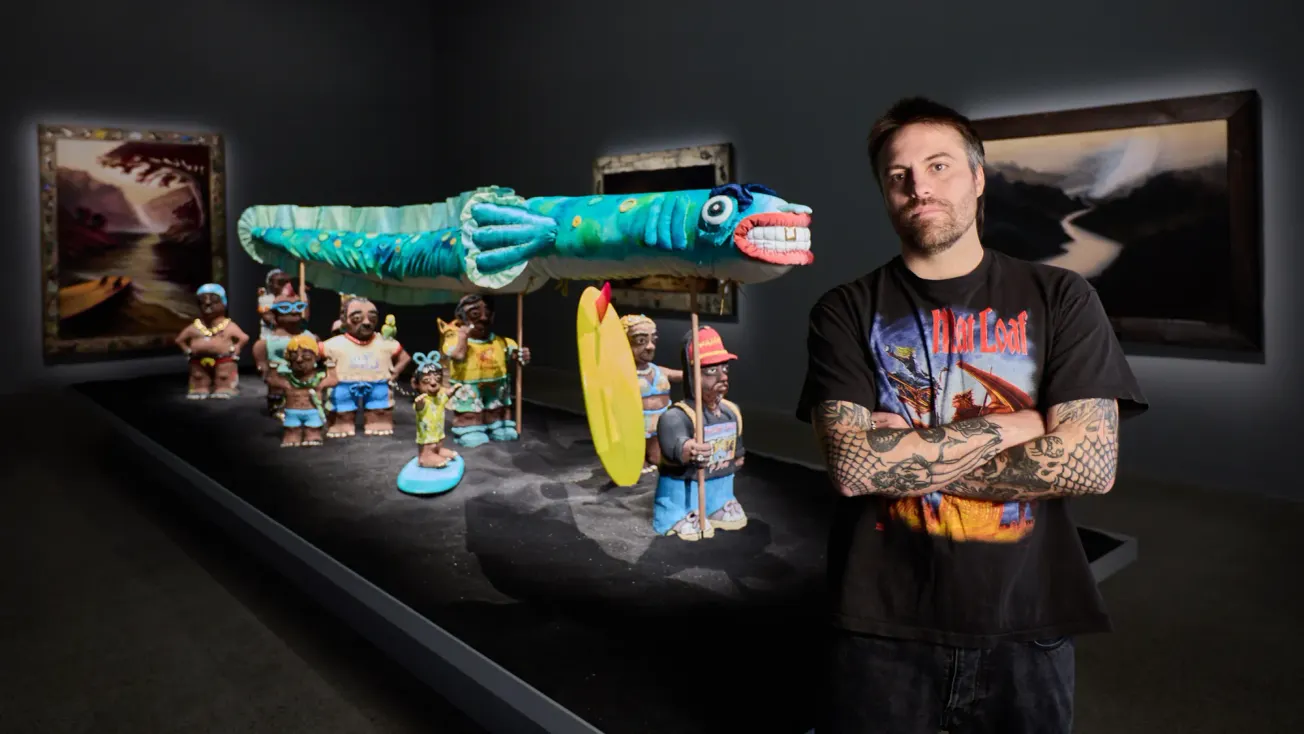
Now, Bain has become the first Dharug artist to present a solo exhibition at the Art Gallery of New South Wales in its 155-year history. His exhibition, By the River, brings together sculpture and painting to explore the relationship between Sydney's costal culture and the ancestral Country of the Boorooberongal people, a Dharug clan to which Bain belongs.
The milestone carries particular significance given that Dharug people are among the Traditional Custodians of the land in which Sydney was established. Their histories and continuing cultural presence has often been overlooked in dominant accounts of the city's identity, including the familiar image of its beaches as predominantly white recreational spaces.
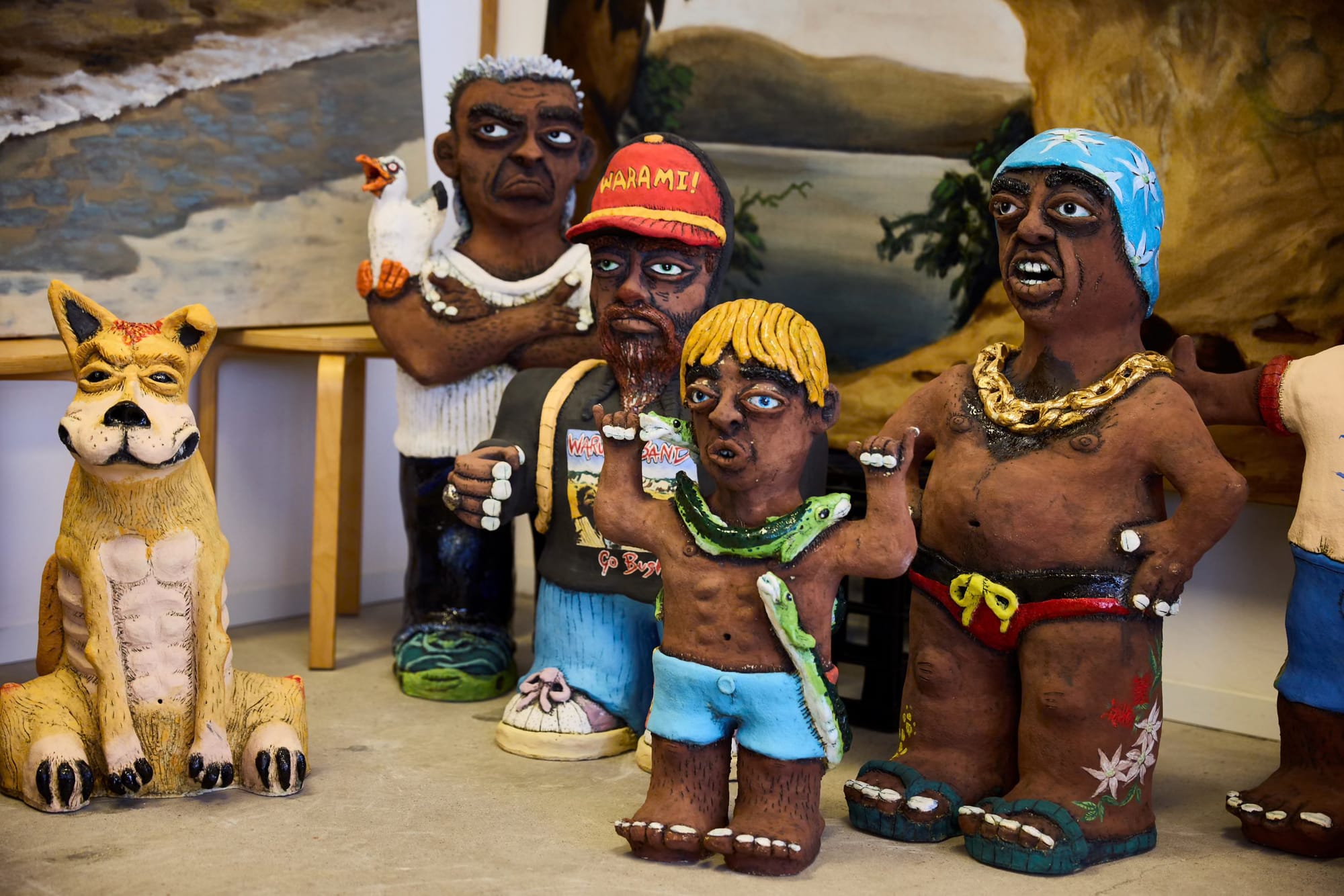
Bain approaches these histories with humour, drawing on the surf culture that shaped his childhood. At the centre of the exhibition, eleven ceramic figures representing family and friends gather in a procession across glittering black sand. Dressed in swimwear, the figures resemble an ordinary group of Australian beachgoers, challenging assumptions about who belongs on the shoreline.
Above them hangs a four-metre-long sculpture of a long-finned eel, known in Dharug language as burra. Created with his mother, Kathleen Bain, and artist Kit Wu Bylett, the eel draws on the species' migration between ocean and river systems. Its return to freshwater becomes a metaphor for Bain's own journey of reconnecting with Dharug culture and Country.
This journey continues through five new landscape paintings, which follow a passage from Avalon Beach to the Dyarubbin, or Hawkesbury River. Beginning at sunrise and ending at dusk, the works mark a development in Bain's practice, introducing a quieter, more atmospheric approach alongside his recognisable figurative sculptures.
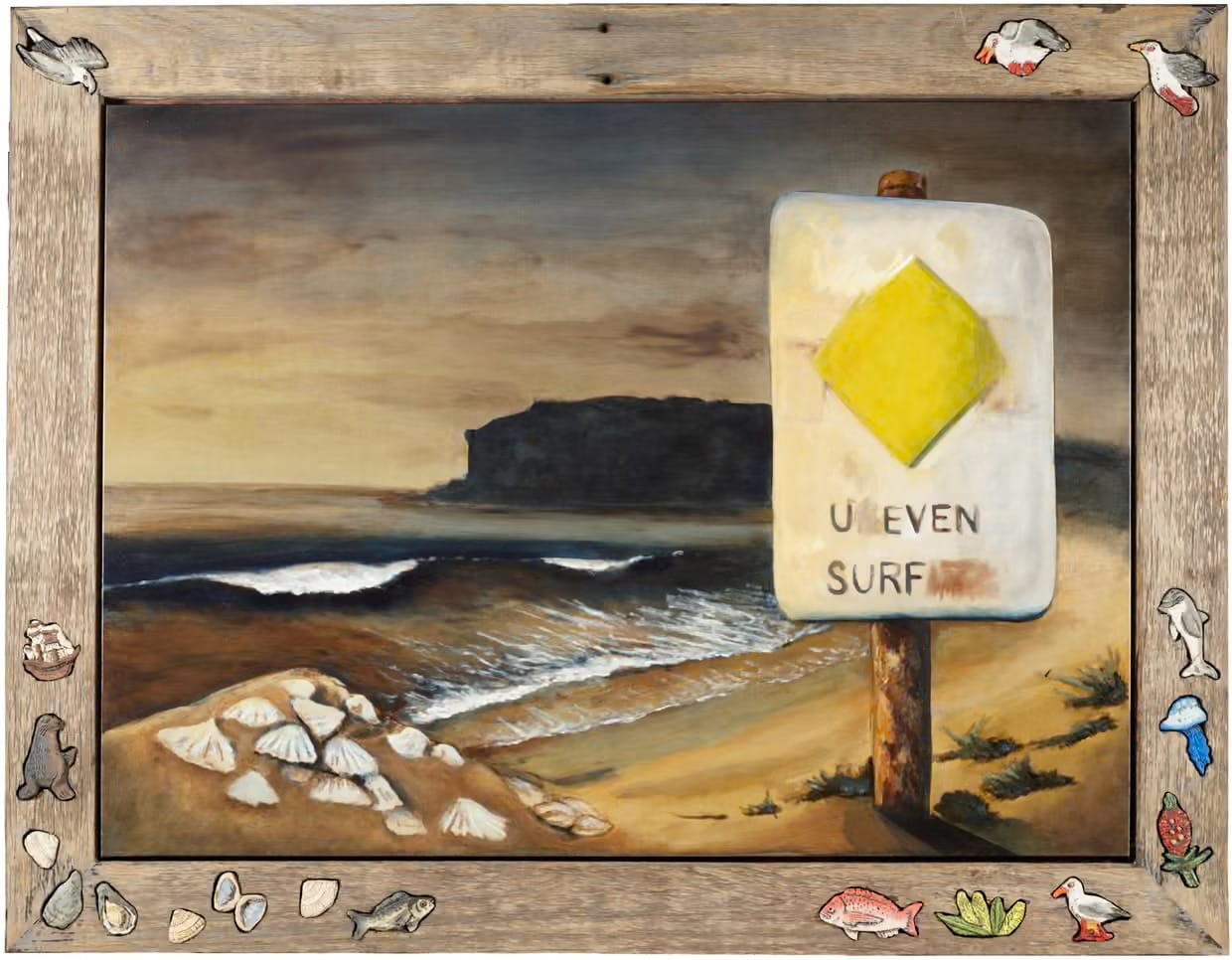
Family collaboration is central to the exhibition. Bain's mother, who encouraged his artistic interest as a child, contributed to the eel sculpture, while journeys along the Hawkesbury with his father helped inform the landscape paintings. The resulting works reflect a process of cultural learning grounded in family relationships and direct encounters with Country.
Speaking about the exhibition, Bain acknowledged the responsibility of being the first Dharug artist to receive this opportunity, descibing the project as a step towards transforming a history of dispossession and disconnection into one of cultural pride.
His achievement also raises an uncomfortable question about institutional recognition. That a Dharug artists first solo exhibition at one of Australia's leading public galleries should arrive 155 years into its history reveals how much ground remains to be covered in representing the First Peoples of Sydney.
Billy Bain: By the River is on display in the Contemporary Projects Gallery, Naala Badu, at the Art Gallery of New South Wales until 8 November 2026. Entry is free.