Table of Contents
Days before the 16th Gwandgju Biennale opened in South Korea, a dispute over two words placed the institution in an uncomfortable position between artistic freedom and international diplomacy.
Taiwanese artists accused the biennale of political censorship after discovering that their presentation, originally accepted as the "Taiwan Pavilion", had appeared in promotional material under "NTMOFA", the acronym for Taiwan's National Taiwan Museum of Fine Arts.
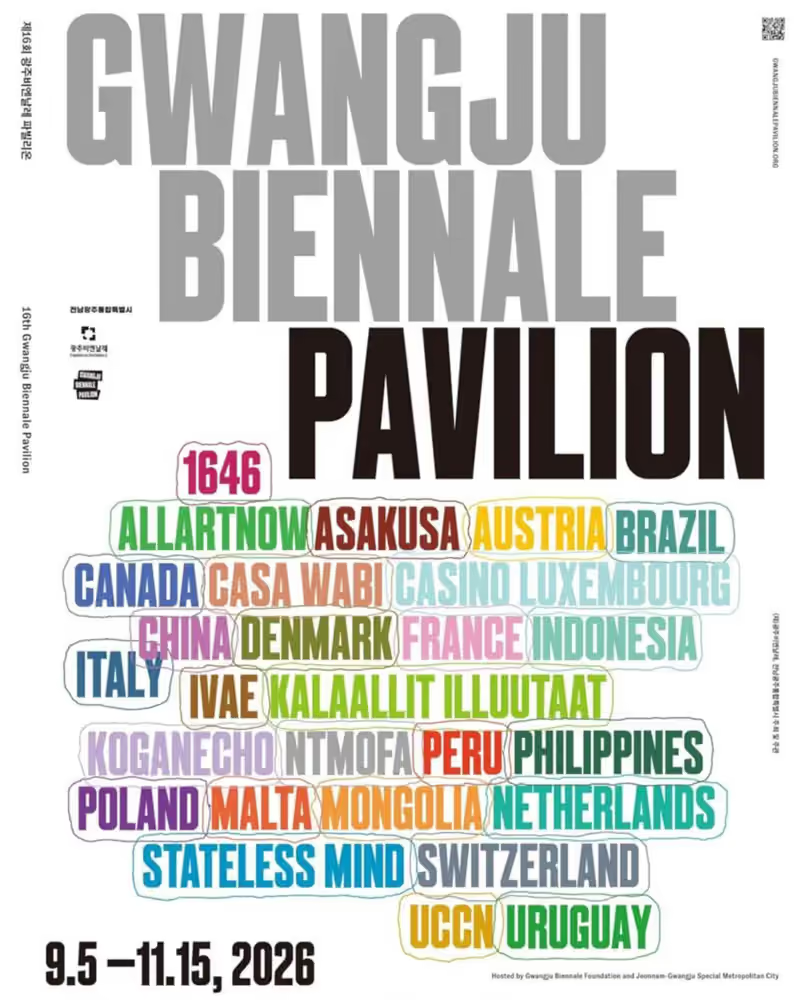
While the difference may seem administrative, in the context of Taiwan it holds considerable political weight. Beijing considers Taiwan part of China, and opposes language that presents it as an independent state. South Korea, like many countries, maintains a diplomatic relationship with Beijing rather than Taipei, and follows a "One China" policy.
For the ten Taiwanese artists and curator Chen Hsiang-Wen, this problem extends beyond geopolitics. Other participants were listed using a multitude of national and institutional names, including Mongolia and UNESCO Creative Cities Network. The biennale's pavilion programme has also invited participation of both countries and cultural institutions.
In a joint statement released in August, the Taiwanese participants described the change as censorship and argued that international arts organisations have the responsibility to protect how artists identify themselves.
Their criticism carried particular significance in Gwangju. Founded in 1995, the biennale has built much of its identity around the democratic legacy of the May 18 Gwangju Uprising in 1980, when citizens resisted South Korea's military government and were met with deadly state violence. Democracy, human rights, and resistance are therefore embedded in the institution's public history.
The Gwangju Biennale Foundation rejected the suggestion that it had censored the exhibition, describing the controversy as an administrative issue involving participant classifications and contractual agreements. It maintained that it had not interfered with the artists' work or exhibition content.
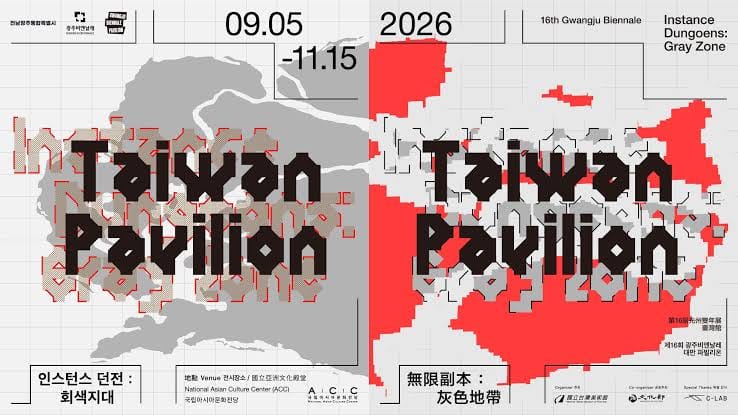
But, this explanation did little to settle the dispute. South Korean artists and cultural figures joined calls for greater transparency, arguing that artistic autonomy also includes the terms under which artists are represented by an institution.
The "Taiwan Pavilion" name was eventually reinstated, but the decision created another problem. China's ambassador to South Korea objected, and installation of the Chinese pavilion was subsequently suspended, with curators and installation staff reportedly leaving the venue before it was completed.
Both the biennale and Gwandju city government have since apologised. The city also reaffirmed its adherence to South Korea's "One China" policy, stressing that allowing the presentation to use the name "Taiwan Pavilion" should not be interpreted as recognising Taiwan as a sovereign state.
That clarification reveals the difficult position the biennale created for itself. There is no public evidence that Beijing originally instructed organisers to remover "Taiwan" from promotional material, so attributing the initial decision directly to Chinese pressure would go beyond what is known. But the diplomatic sensitivity surrounding the name was hardly unpredictable.
If an international biennale chooses to accommodate presentations associated with both Taiwan and China, it also assumes responsibility for establishing how those participants will be represented before either arrives. Calling the resulting dispute an administrative misunderstanding does not resolve the underlying issue.
The controversy ultimately concerns institutional consistency. An organisation can respect South Korea's diplomatic position while still establishing transparent rules around artistic identification. Without those rules, decisions made quietly behind the scenes can appear political regardless of their stated intention.
For a biennale so closely associated with Gwangju's history of democracy and resistance, that distinction matters. Protecting artistic autonomy requires more than leaving artworks untouched. It also requires institutions to be clear about the conditions under which artists are invited to speak, exhibit, and identify themselves.
The 16th Gwangju Biennale, title "You Must Change you Life", runs from September 5 to November 15, 2026.