Table of Contents
For much of the twentieth century, Île Seguin was one of France's greatest centres of industrial production. Tens of thousands of Renault employees worked on the island in the Seine, building cars that became synonymous with the country's manufacturing ambitions. More than three decades after the factory closed, the site has entered a new chapter with the opening of 'Large', a contemporary art centre backed by French property developer and collector Laurent Dumas.
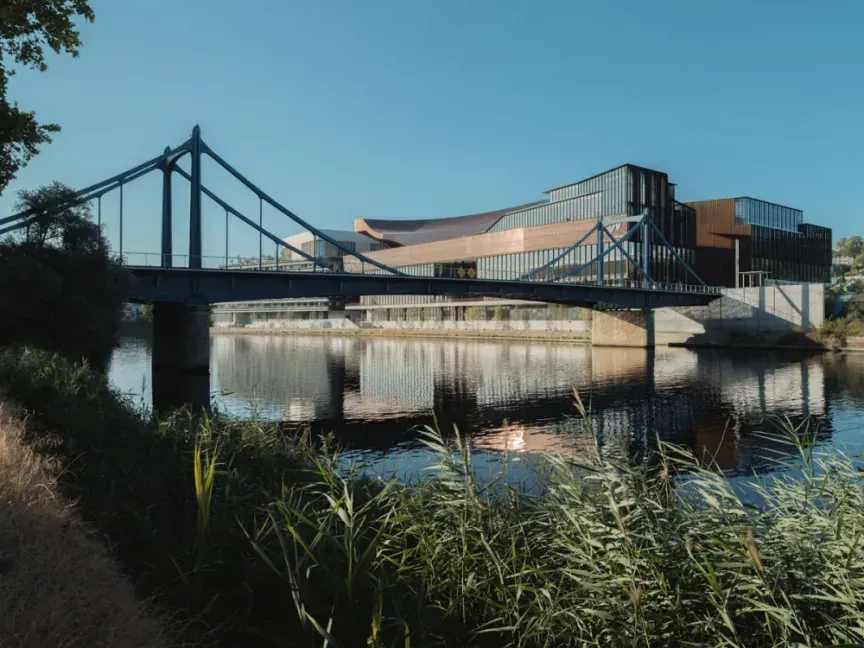
Inaugurated on 17 October 2026, Large forms the cultural centrepiece of the €450 million Pointe des Arts development in Boulogne-Billancourt, just outside Paris. Designed by Pritzker prize-winning RCR Arquitectes in collaborations with CALQ, the copper-clad building is the latest addition to an island whose redevelopment has been debated and delayed since Renault ceased production in 1992.
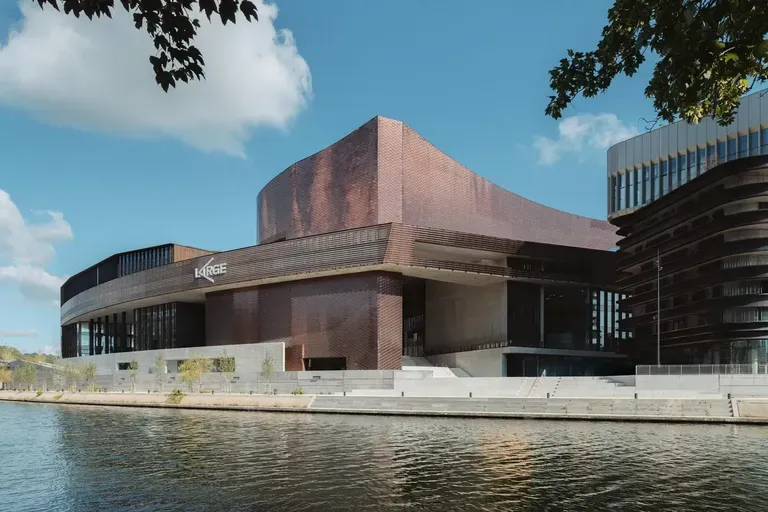
Supported by the Emerige Endowment Fund, the non-profit institution is directed by Paula Aisemberg and will present a changing programme of temporary exhibitions, with particular attention to artists living and working in France. Its opening exhibition, Imaginary Engine, curated by Cecilia Alemani, establishes an immediate connection with the island's industrial past.
Running until 7 March 2027, the exhibition brings showcases more than 100 works by 55 artists from 23 different countries, including 17 newly commissioned pieces. Drawing on the Fonds Renault pour l'Art et la Culture, it revisits the manufacturer's longstanding relationship with artists, which developed through its pioneering Research, Art, and Industry programme in the late 1960s.
Artists including Jean Dubuffet, Arman, Jean Tinguely, and Victor Vasarely were invited to Renault's factories, where access to industrial material, machinery, and technical expertise opened new possibilities for artistic production. Their works now appear alongside contemporary responses to the automobile and the social structures surrounding its manufacture.
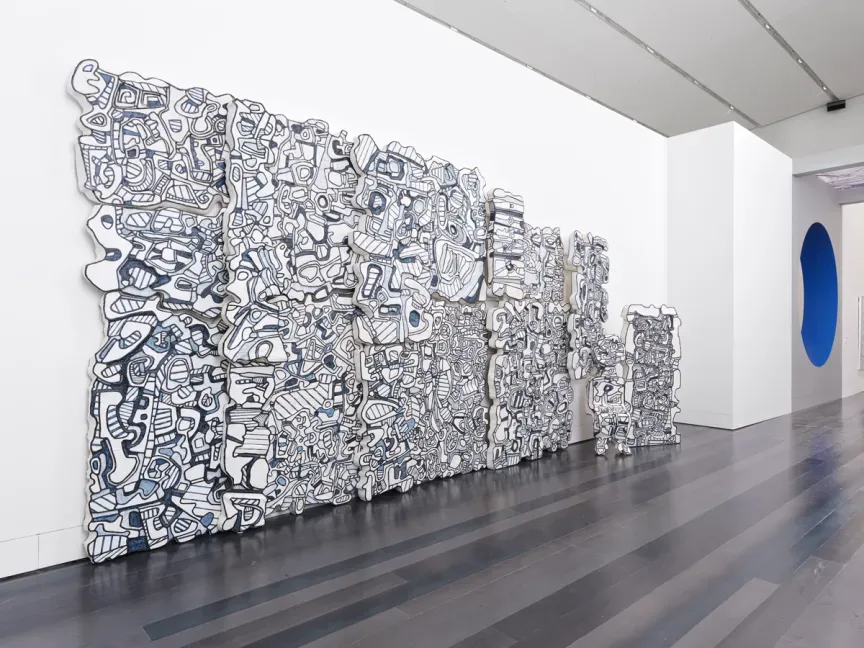
Alemani organised the exhibition into five thematic chapters, tracing the car's transformation from a product of industrial labour into an object of desire and, ultimately, a symbol of an increasingly automated life.
Among the new commissions, Clément Cogitore revisits the Renault factory strike of 1947 through a film depicting a women knitting beside an immobilised assembly line. Giulia Andreani looks at the history of the Group Femmes at Renault, which campaigned for women's rights during the 1970s. Their contributions introduce the workers and political struggles often absent from celebratory accounts of industrial progress.
Elsewhere, Bertrand Lavier transforms a Renault Formula One car with his characteristic painted brushstrokes, while Bianca Bondi places the body of a Renault 9 in an overgrown landscape, its engine transformed into a crystalline pool. Both works reconsider the automobile's cultural significance and material afterlife.
The exhibition also examines how industrial heritage is preserved as former manufacturing sites become cultural destinations. Large's opening returns public activity to an island once defined by its workforce, although its future identity will be shaped by a privately supported arts institution operating within a major commercial development.
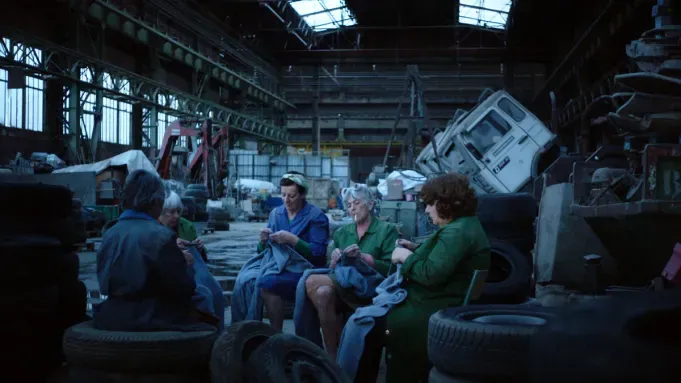
With approximately 40% of its public-facing spaces accessible without charge and free exhibition admission for visitors under the age of 26, Large has placed accessibility among its stated priorities. Its longer-term programme will determine how successfully it establishes a distinct identity alongside Paris's other major contemporary art institutions.
For its inaugural exhibition, however, the institution has chosen a subject inseparable from its location. Imaginary Engine brings the island's industrial achievements, social history, and artistic legacy together at a moment when the relationship between human labour and technology is undergoing profound transformation.