Table of Contents
Jo Darvall walks into the forest before she paints it. That is the simplest way to understand what she does, and it is also the thing that sets her apart from a long line of Australian painters who treated the landscape as a view to be captured from a safe distance. Darvall belongs to a generation that expanded the language of landscape painting without walking away from its traditions. For more than three decades she has moved between painting, printmaking and drawing, and across all of it she keeps returning to one question. Not how a place looks, but how it feels to be inside it.
Her work is unmistakably Australian, yet it resists the big heroic view that has shadowed the country's landscape tradition for generations. She does not hand you the panorama. She takes you into the trees, down to the riverbank, under the canopy, to the place where memory, movement and close looking stop being separate things.
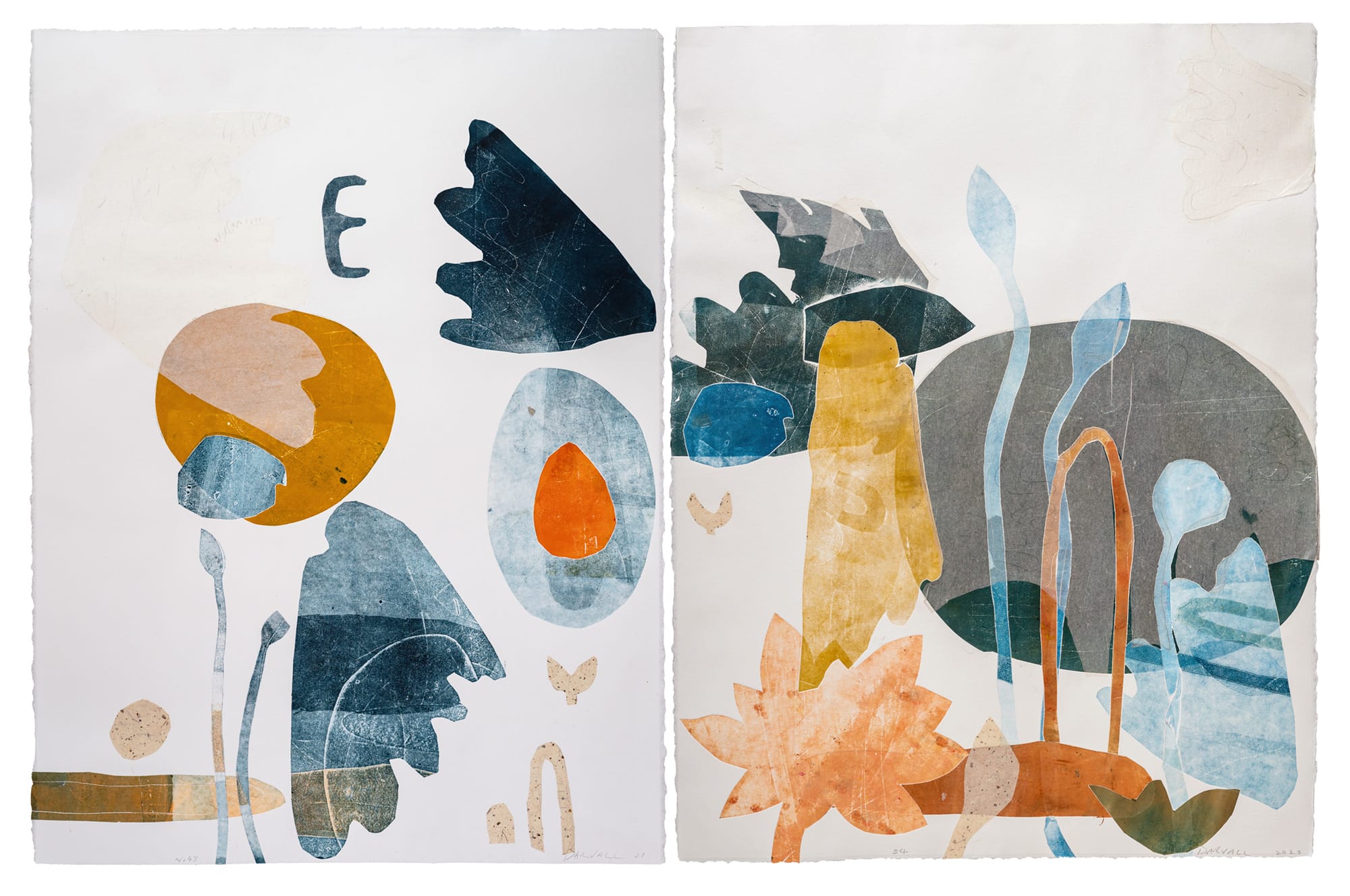
She was born in 1966 in Yarram, a small town in Victoria's Gippsland, and she trained as a printmaker at the Victorian College of the Arts in Melbourne, finishing a fine arts degree in 1990. Those years set down two foundations that still hold up everything she makes. One is the discipline of drawing and printmaking, where every mark has to mean something. The other is a habit of going to the landscape itself rather than working from a photograph. Even now, with painting at the center of her practice, you can see the printmaker in the way she builds a picture. Layers stack up on purpose. Textures talk to one another. Underneath the looseness there is structure, put there deliberately.
Darvall's life has carried her across continents, and it shows in the work without ever fragmenting it. She started in Melbourne, spent about ten years living and working in Singapore, then settled in Western Australia. Distance seems to have sharpened rather than dulled her eye. Leaving the Australian bush and coming back to it let her see familiar country as if for the first time. Today she lives and works in Fremantle, where forests, coastline and river systems give her the physical starting point for most of what she paints.
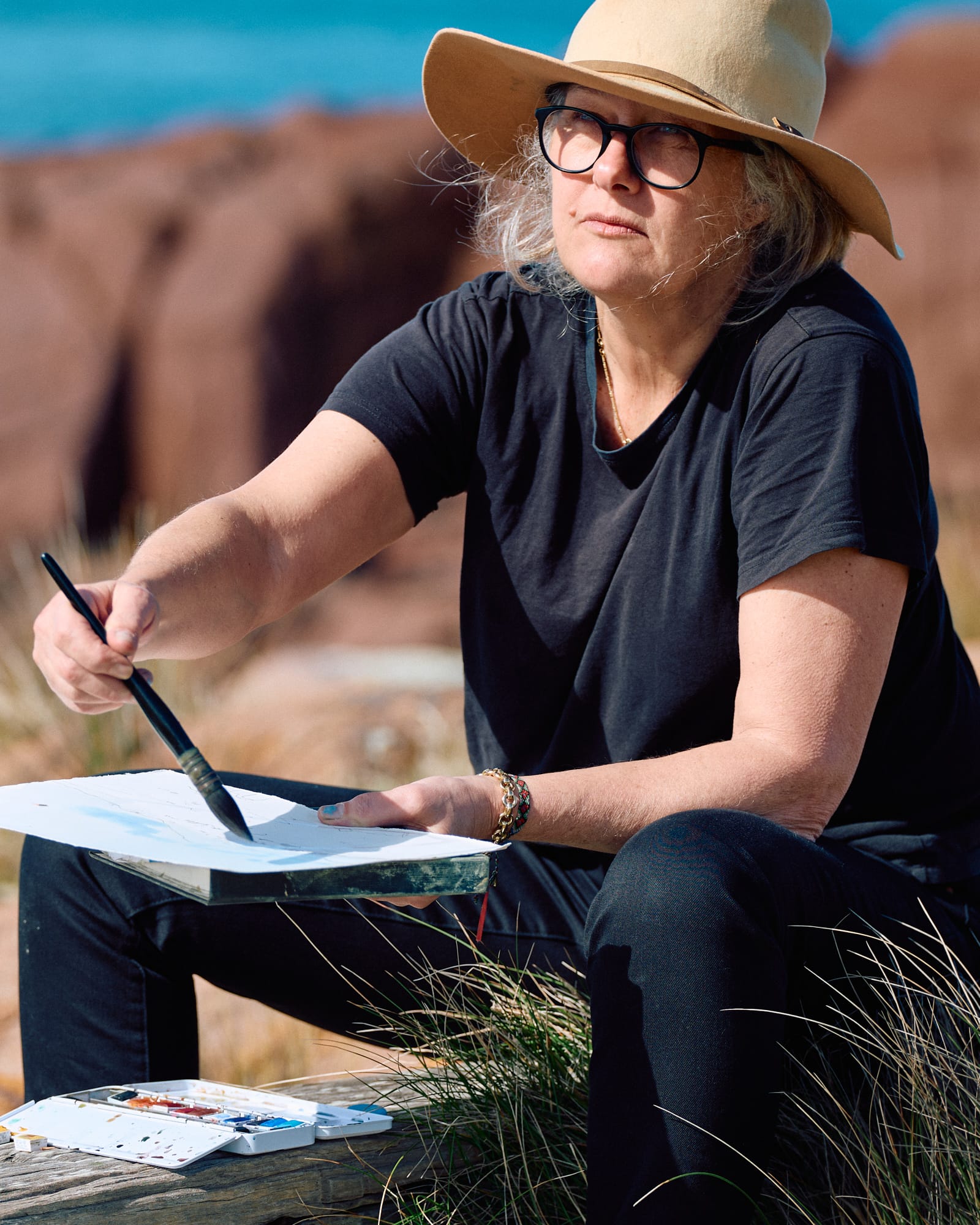
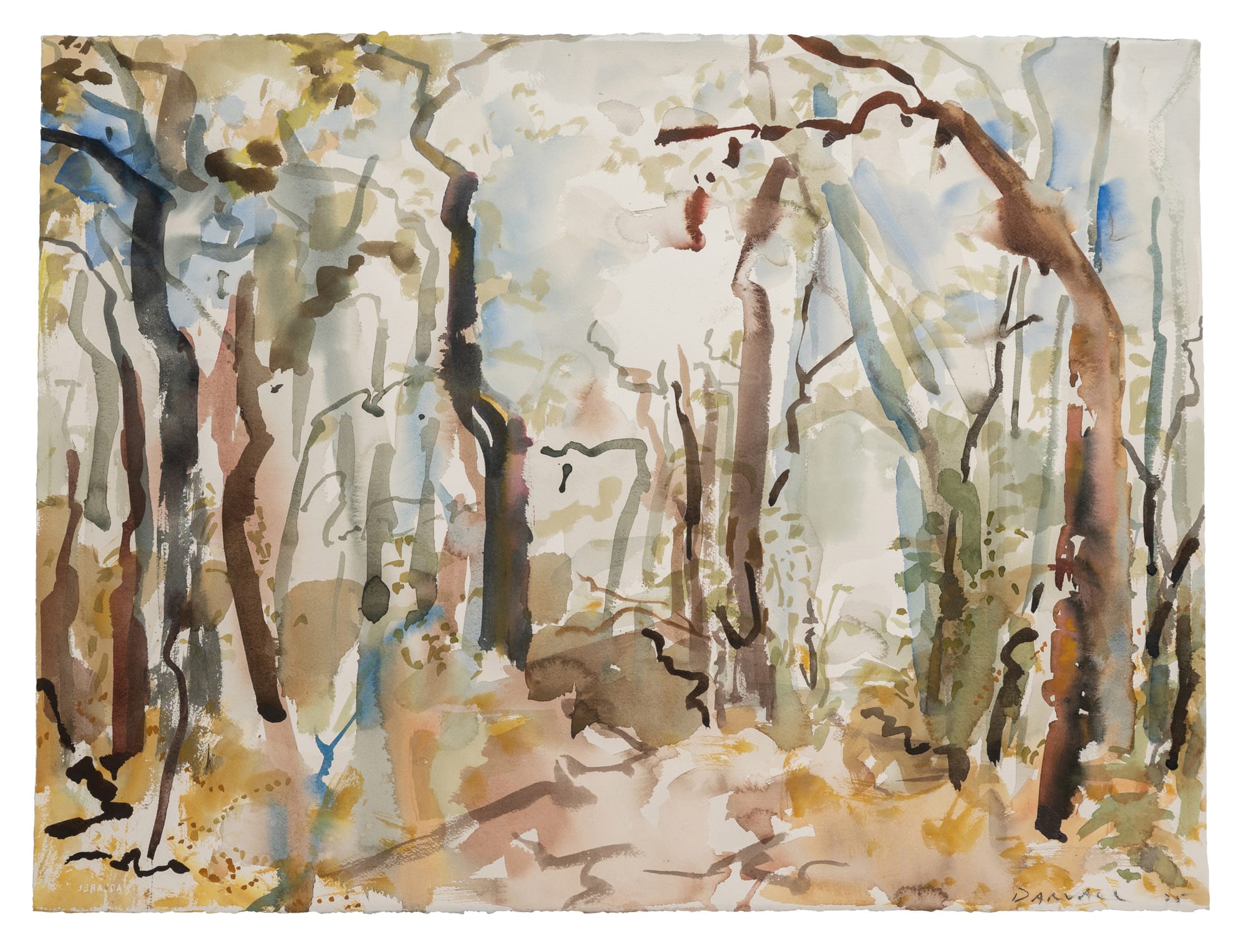
Here is what makes her paintings unusual. They almost never try to describe a whole view. They grow out of repeated walks through particular places, out of drawing on site, out of watercolour studies and long stretches of just paying attention. She talks about listening as part of the process, which tells you she meets a landscape with more than her eyes. That shifts what the finished painting is for. It stops being a record of scenery and becomes a record of sustained attention. You can feel the walking in them, the stopping to look hard at bark or light or undergrowth, the coming back again until a place finally gives up its character.
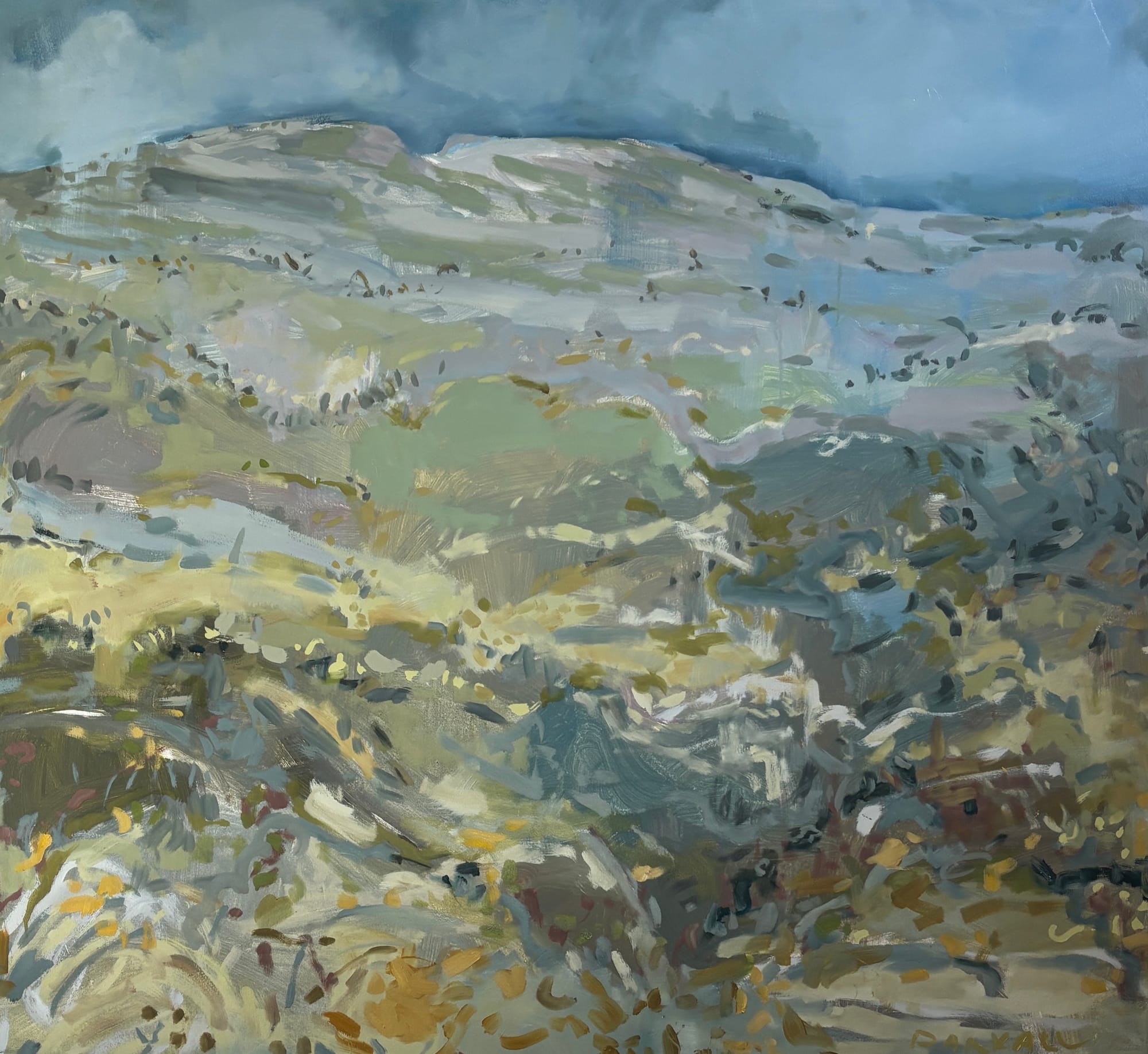
The printmaking never leaves. Layers overlap the way the successive states of a print do. Repeated marks set up a rhythm that pulls your eye across the surface. And she holds a careful line between abstraction and representation. A tree stays a tree. A river still takes up real space. But the forms loosen into gesture and transparent layers that feel closer to memory than to documentation. That is the interesting ground her paintings occupy in Australian landscape painting right now. They honor observation without spelling everything out, and they leave room for you to finish the picture with your own memory.
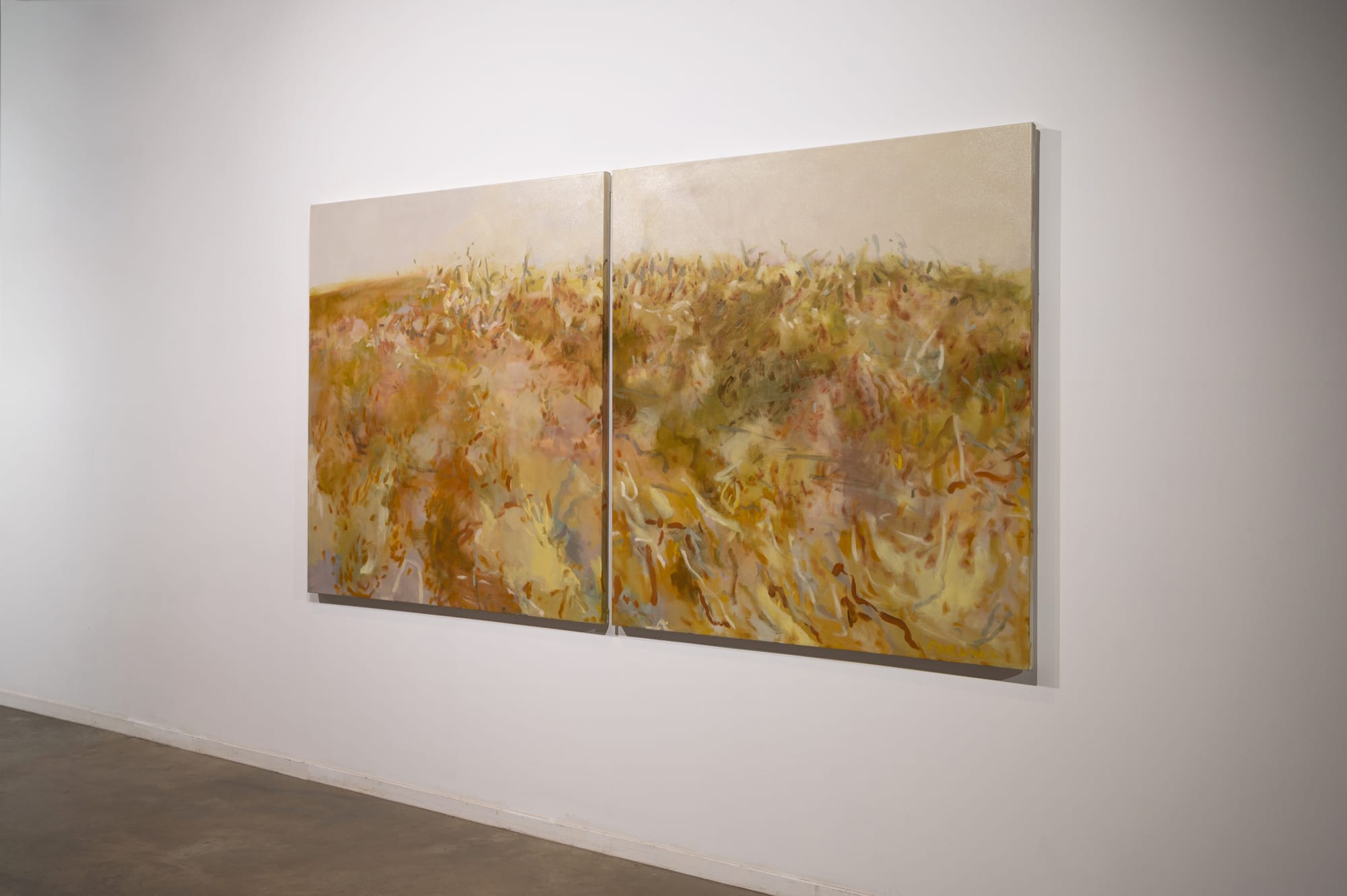
Western Australia has become the heart of this. The forests around Boranup, the Wheatbelt, the Swan River and other regional country turn up again and again. She is not after landmarks. She goes for the internal architecture of a place, the trunks and branches, the shifting light, the negative space between things. The gaps between the trees end up mattering as much as the trees. The result is a picture that feels wide open and intimate at the same time.
Her research tells you how seriously she takes all of this. For a body of work rooted in a particular region she will immerse herself in the place over long stretches, producing dozens of drawings and watercolours before she commits to a larger canvas. She reads the place too. She looks at how earlier painters answered to the same country, and she sits with the deeper history of it, including the knowledge of the people who cared for that land long before European settlement. Every Australian landscape carries those layered histories, and she paints as though she knows it.
Recognition has come steadily rather than in a single burst. Darvall has shown widely at home and abroad, through solo and group exhibitions across China, Singapore, Fiji and the United Kingdom. Her work sits in government, corporate and private collections in Australia and overseas. In 2023 she won the Collie Art Prize, the richest regional art prize in the country, worth $50,000. In 2024 she held artist residencies with Edith Cowan University and the Parliament of Western Australia, and at the close of the parliamentary residency the collection acquired a large diptych along with several other works. That kind of acknowledgment is less about technical polish than about a long, steady contribution to how the Australian landscape gets painted now.
Teaching has run alongside the studio the whole way. She has lectured in fine arts, taught printmaking and painting, and helped build communities of artists, including co-founding the Swan River Print Studio. That teaching role fits the work. There is very little interest in spectacle here, or in novelty for its own sake. What she models instead is patience, sustained looking and real command of craft. A student who spends time with her paintings comes away with a useful lesson, that the new thing usually arrives by going deeper into a tradition rather than by throwing it out.
Stand back and take in the whole arc of it, and Darvall's paintings are about more than forests or rivers or coastlines. They are about a way of paying attention. The repeated walks, the field drawings, the printmaking, the layered canvases all point to the same idea, that a landscape is something that unfolds slowly, through experience. In a moment ruled by fast images and instant documentation, her work argues for a different pace. Places give themselves up gradually, it says, through return visits and careful looking. That quiet persistence has become the signature of her contribution to Australian art. Her subject, in the end, is not the landscape so much as the slow work of building a real relationship with a place.