
Table of Contents
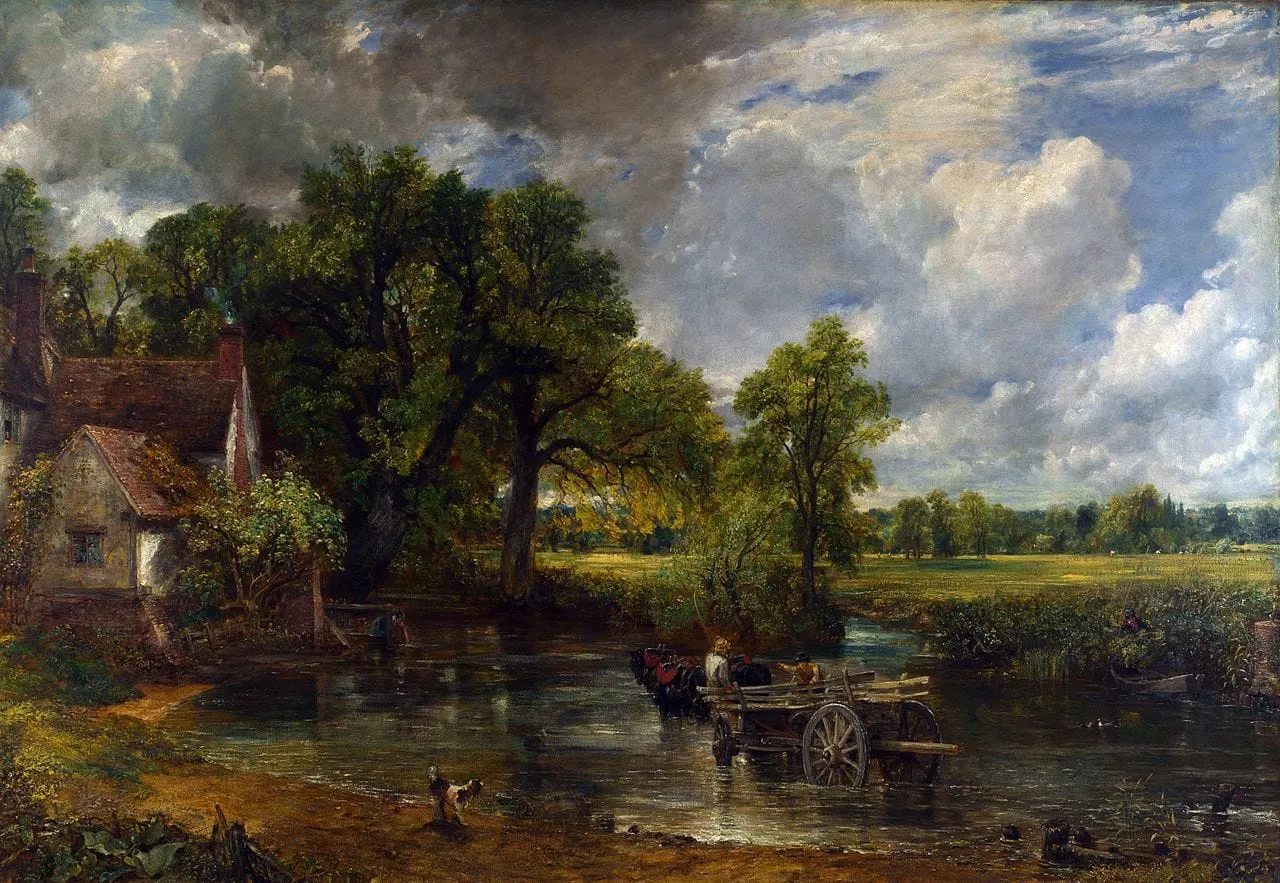
A cart sits axle-deep in a river, a dog watches from the bank. Beyond the water, people work in fields beneath a sky heavy with clouds. There is no grand event at the centre of John Constable's The Hay Wain. In fact, very little appears to be happening at all. That ordinariness is part of what makes the painting remarkable.
Created in 1821, The Hay Wain depicts the countryside around Flatford on the River Stour, close to where Constable grew up in Suffolk. Willy Lott's house sits on the left. In the foreground, three horses pull a wooden wagon through the shallow water. If you look more closely at the painting, the landscape get's busier. You will see workers gathering hay in the distance, another cart being loaded, and a woman washing something or other beside the house. On first glance, it looks like some untouched wilderness. But it is a landscape where people live and work.
Now, more than 200 years later, the painting has finally returned home to Suffolk for the first time.
Painting the place he knew
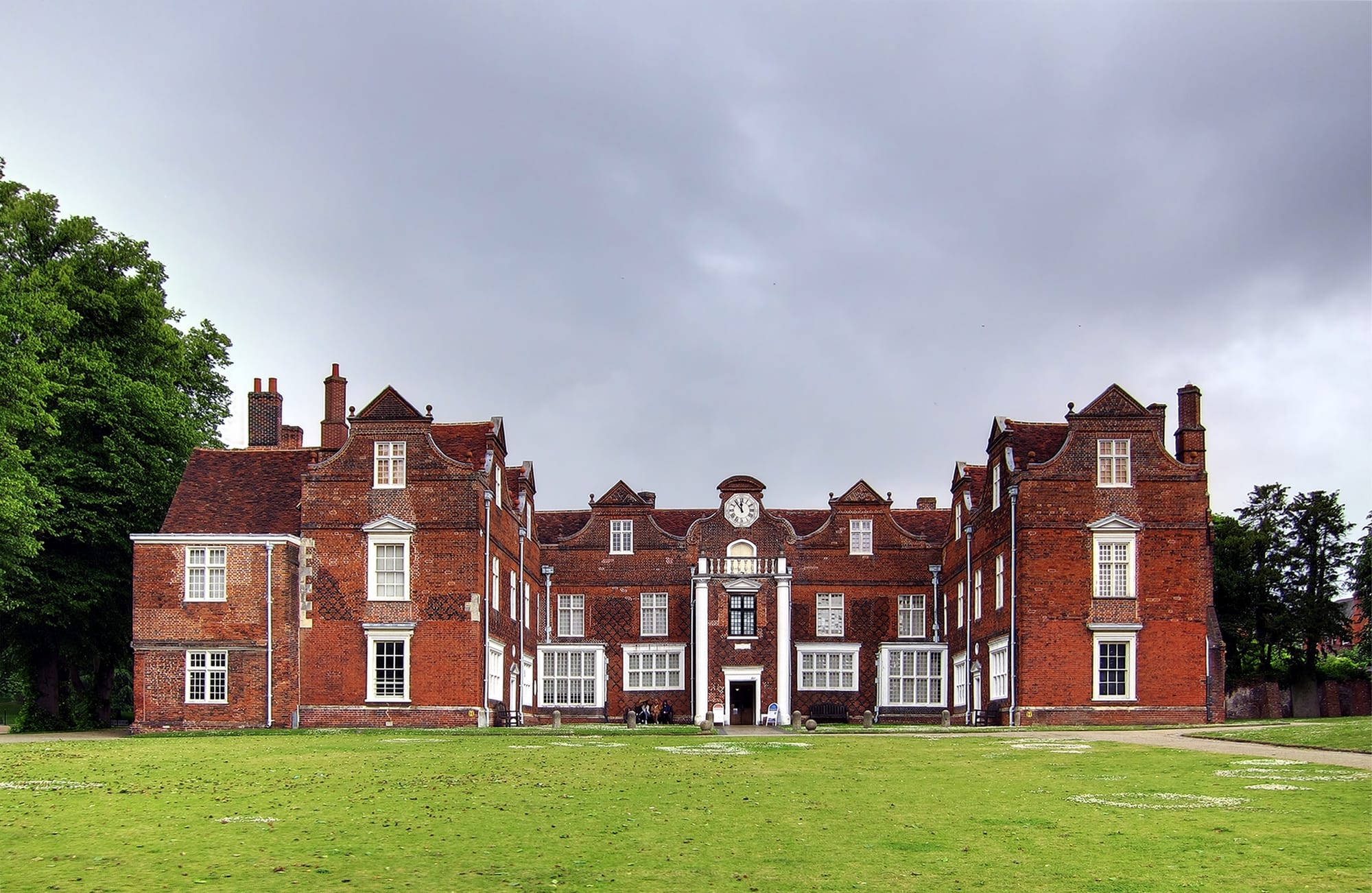
The Hay Wain is on loan from London's National Gallery to Christchurch Mansion in Ipswich as part of celebrations marking 250 years since Constable's birth in East Bergholt in 1776. The return of this particular piece is significant due to the fact that Suffolk was a central part to Constable's development as an artist.
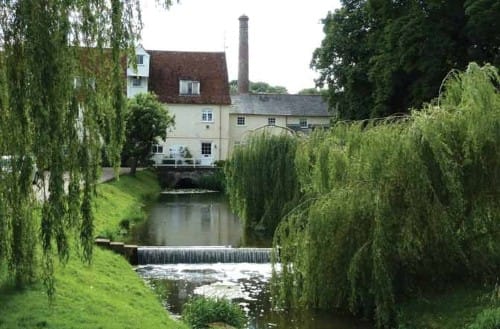
He repeatedly drew and painted River Stour, Dedham Vale, Flatford Mill, and the surrounding countryside. Long before The Hay Wain, a 16-year-old Constable even carved an image of his father's windmill into a wooden beam.
At the time, while landscape painting was hardly new, Constable's approach was different. Early European landscape traditions often showcased carefully constructed, idealised worlds inspired by classical history and mythology. Constable concentrated instead on places he knew intimately. Trees, muddy water, changing clouds, cottages, and agriculture work were worthy subjects in their own right.
This partly explains why The Hay Wain can seem so plain. Its subject is everyday life continuing as its usual place. Constable enlarged the everyday scene onto a canvas roughly six feet wide, a scale usually capable of commanding attention at an exhibition. The result gives an ordinary corner of Suffolk an almost monumental presence.
Look closer at the idyll
Today, The Hay Wain has become shorthand for an idyllic English countryside. Its familiarity can make it easy to stop looking closely. But this image captures a working environment.
The cart in the water is connected to the agriculture labour happening further into the scene. Figures harvest hay in the distance while a woman appears to be washing near the cottage. The mill pond itself belongs to a landscape shape by human activity. That distinction is a point to remember as Constable was painting during a period of change.
His lifetime, from 1776 to 1837 coincided with the Industrial Revolution. Across Britain, factories expanded, steam power accelerated production, and industrial towns grew. Constable knew London and its industrial landscape, yet repeatedly returned to rural Suffolk as a subject.
Seen in that context, The Hay Wain captures something more complex than a pretty countryside. It preserves the relationship between people, labour, and landscape during a time where Britain was being transformed. Constable could not have known how much further that transformation would go.
The same landscape, a different climate
The painting gives an unexpected resonance in 2026. The Christchurch Mansion exhibition opened during a period of intense summer heat. Outside the gallery, the Suffolk landscape associated with Constable looked markedly different from the cool greens, water, and cloud-filled sky contained within his canvas.
This doesn't make The Hay Wain a scientific record of Britain's climate in 1821. A painting is constructed by an artist, not produced by a measuring instrument. Constable made choices about his composition, colour, atmosphere, and what to include.
But paintings can still preserve something valuable about how people experienced and understood environments at particular moments in history. That makes The Hay Wain an interesting starting point for students studying environmental change.
Instead of educators asking "What does this painting show?", a more thought-provoking question may be "What kind of landscape does this painting imagine as normal?"
Students can examine the water, vegetation, agriculture, weather, and human activity, then compare those features with photographs, environmental records, and observations of the same region today.
They can also question the source itself. Is the painting a reliable source? What can and can't it tell us? How might Constable's affection for his childhood landscape have shaped what he chose to show?
These questions turn artwork into richer pieces on information, rather than just a nostalgic image or proof of environmental decline.
A landscape held still
Perhaps that is why The Hay Wain feels different when viewed today. Constable painted movement everywhere. The clouds passing overhead, light shifting across fields, water distributed by horses and people continuing with their work. Yet the painting itself has held one version of Suffolk still for more than two centuries.
The real landscape could never do the same.
That is one valuable thing historical art can offer us. It doesn't simply show what a place looked like. It reveals what an artist noticed, valued, and considered worth preserving. For Constable, that was the landscape he had known since childhood.
Two hundred years later, looking at The Hay Wain invites us to consider what has changed outside its frame, and what parts of our own everyday landscapes may one day need remembering.



.jpg)