Table of Contents
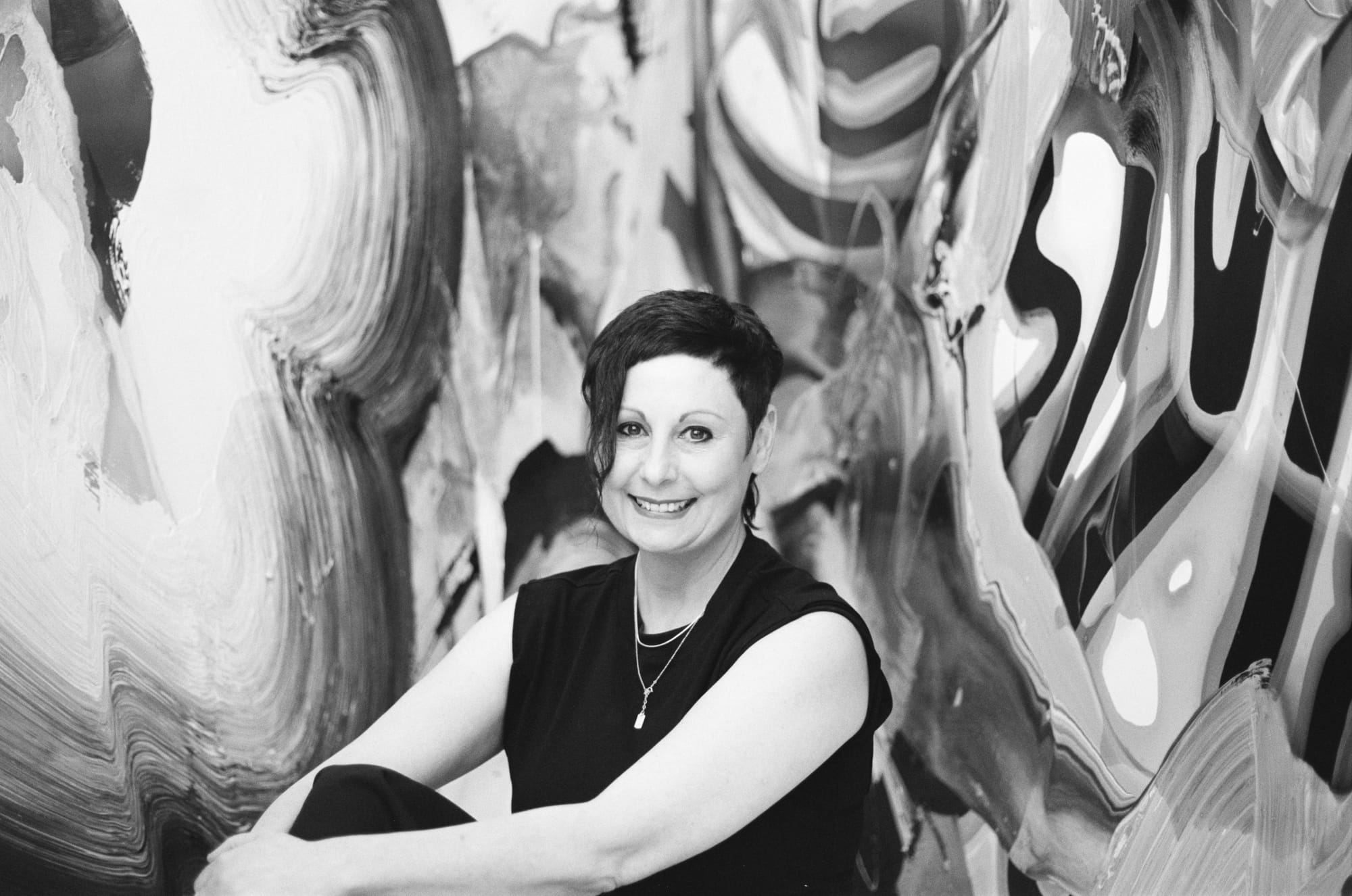
The first thing Cristina wants me to understand is that a painting never begins on the canvas. It begins much further back, in a feeling she cannot quite name, and a visceral need to be alone with it until it finds its way into paint on a surface. We meet in her studio in Melbourne's leafy suburb of Eltham, and she spends the next hour circling her own life the way she circles a painting until some truth permeates up through the layers. Twice in our interview the tears come close, and twice she goes on, which I have come to see as her real signature: she feels everything so intensely but keeps going anyway.
A bedroom full of Braque
She grew up in communist Romania, in a household where words were the family currency. Her father was an Orthodox priest, but not the narrow kind; he read philosophy, collected books and told his daughter she could become anything at all, as long as he could see she was happy. Her mother made her own quiet case for beauty, a yellow room crowded with bouquets, a private refuge in a grey state where, Cristina says, you had to find your own way to save yourself.
The violin came first and did not last; she was too nervous, too emotional. She admits she is still that way. Words were harder. While her father moved his congregation with extraordinary sermons, his daughter froze in class hunting for the right answer, convinced language was too slippery to trust. Only with a brush in her hand did she feel she was telling the truth. A primary teacher once watched her paint the same blue sea again and again in a single lesson, and blue is still where she starts.
By chance her bedroom was also her father’s library, and in a house without bedtime stories she would reach up each night for Toulouse-Lautrec, Degas, Picasso and the painter who became her lodestar, Georges Braque. Braque and Picasso’s Cubism shattered objects into facets seen from several sides at once, and when the pair began gluing newspaper and stencilled letters into their pictures, words stopped being a barrier and became just another texture. For a child who trusted neither language nor likeness, it was permission to play, and the bones of that discovery still hold up her work.
Ninety-nine for three
At nine she entered the art-school system that eventually brought her to Romulus Ladea, the fine arts high school in Cluj, a handsome building where peacocks strutted through the grounds. Inside, the teaching was rigorously academic, all perspective, rules and exams, and she paid it like a toll, the price of earning the freedom to say what she felt. She already knew she would be an expressionist, because Expressionism, with its insistence on inner feeling over outward appearance, mapped exactly onto the place words had never reached.
A teacher named Kádár changed the temperature of those years. Because she could tell he believed in her, she let him teach her, a lesson about trust she would carry into her own classroom. University entrance meant ninety-nine candidates for three places; she took the third. There the painter Teodor Botiș quoted an old master who was looking for something without knowing what, and the idea turned in her like a key in a lock. Art, she realised, is a target that keeps moving, and an artist’s truest tool is the intuition to recognise arrival, even when nobody else can see it.
Escape, collapse, and resurrection
Her career began when a visitor to her Cluj studio offered introductions to Berlin galleries, and it ran headlong into motherhood. With two small children she lived in a permanent tug-of-war, thinking about her kids at the easel and about the easel with her kids. By the late 1990s, unconvinced that post-revolution Romania held a future for them, she and her husband Valentin, an artist and devoted minimalist who loves only black, followed a client’s tip to a country he promised was hungry for culture. New Zealand turned out to be exactly that.
In Christchurch she found gallerists who trusted her completely, and in Auckland a younger, more experimental crowd. When one gallery collapsed and the other changed direction, Cristina once again saw the writing on the wall and a move was the inevitable outcome. The family sold the first house they had ever owned. "I don't want to cry," she says, "but it was so traumatic", and the move added fresh heartbreak, pulling the children from friendships they had finally been allowed to keep.
However, Australia did not catch them gently. There was no studio, no money, not even paint, and the life she had built gave way all at once. What remained was a pencil, and with it she drew herself in semi-realistic self-portraits, the face contorted, the mouth open in a scream, every wrinkle recorded. Making those pictures was healing. Cathartic, she says. Not because of how they looked, but because of the company they kept with her; the strange conversation you find in your own work when you are utterly alone.
The road back to commercial success was hard-fought, but a path Cristina knew well. Slowly the word got out, galleries came knocking and work began to sell.
The background stories
Two decades of exhibitions across New Zealand and Australia later, Cristina paints with the confidence of someone who knows what her hand can do. To her, abstraction is the most open of forms, and those who see only chaos miss the order underneath: she broke the academic rules she learned as a girl, and rebuilt them as her own.
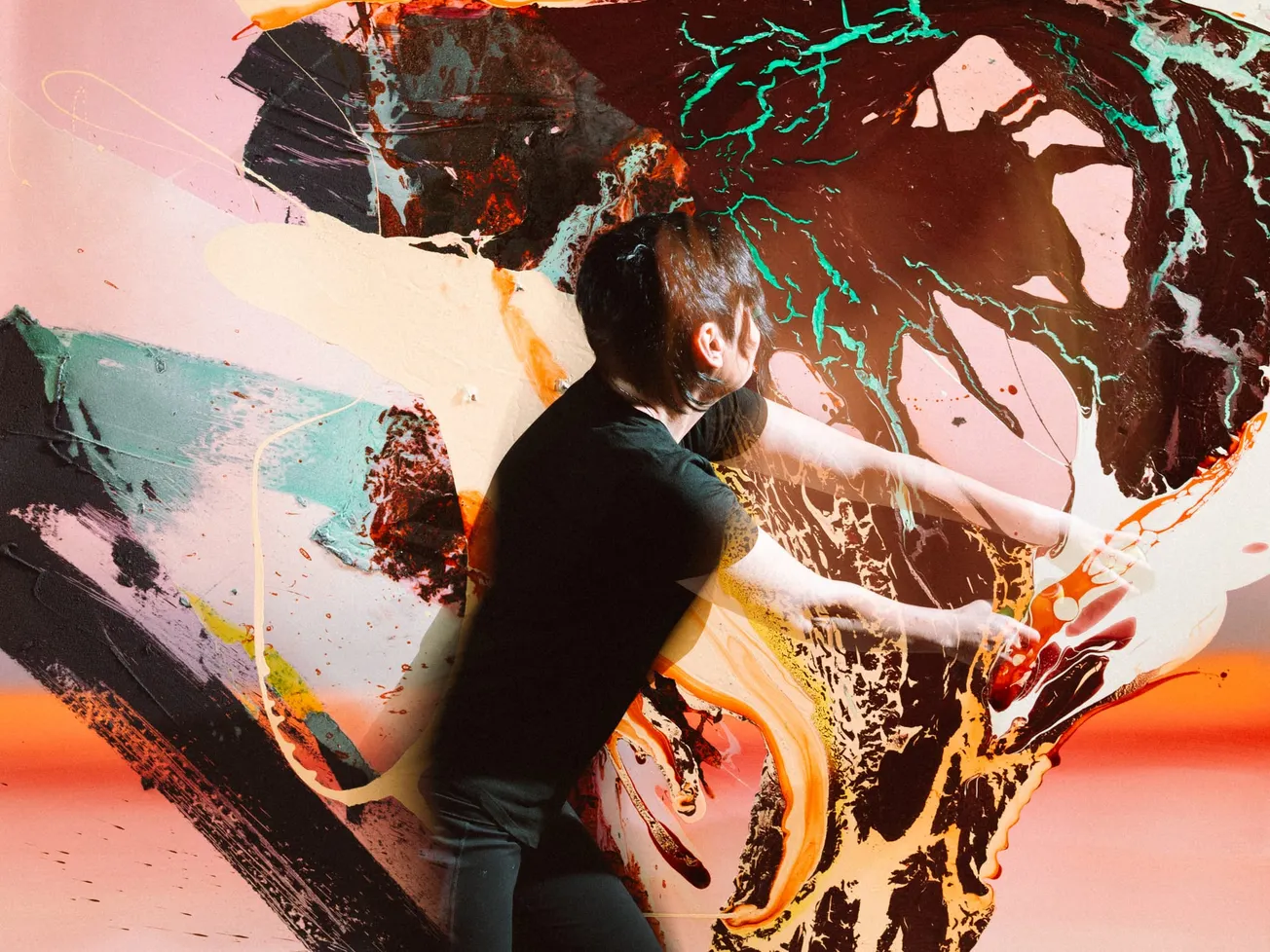
She still opens each canvas with the fast, unfiltered gesture of action painting, but youthful recklessness has ripened into something far more considered. During the interview I called it a dance between chance and intention: informed by years of strict training, the marks fall with expert guidance. The labour is nowhere to be seen; its confidence is everywhere you look.
Wary of the comfortable answers experience offers, she starts her series Background Stories from a ground colour she might not even like, just to see where it pushes her. Lately those grounds have grown spare and soft, edging toward the colour-field tradition of Rothko and Frankenthaler, and the paintings have become less a surface shouting at you than a room you are invited into. She shows me a canvas that stayed unfinished until one green accent, barely three centimetres long, settled into a white passage. A painting, she insists, must speak to you up close, from the middle of the room and from the doorway.
The teacher she needed
Now she mentors young artists, in an order most schools would call backwards. Six-year-olds drawing cats learn to build the face around a line of symmetry, so that by twelve the academic rules arrive as old friends; rather than simply naming Jackson Pollock, she plays them film of him at work so they feel the movement in their own bodies. When one meticulous student spent half a year shading a single object line by line, Cristina persuaded the family to let her break the habit. For two hours the girl made marks, never repeating, always changing angle, until she had to sit down, exhausted and astonished by a colour language she never knew she had. It was the hardest lesson she had ever done, and Cristina told her why: for the first time, she had put herself into it.
In her thirties and forties she sometimes felt life had been unfair. Now she is grateful for every disaster, each one a lesson in resilience and in trusting herself. She calls it intuition, the habit of walking into the dark without a map and believing that is simply how you go on. Every morning she wakes eager to get back to this room, still looking for something, still not quite sure what, which after all these years is exactly the point.