Table of Contents
When the Brisbane Portrait Prize opened its competition to generative AI in 2024, some of its former winners responded by refusing future entry. Two years later, several of those artists are back. They're position on AI has not softened, however, what's changed is how they have chosen to oppose to it.
The Brisbane Portrait Prize allows declared generative AI works to compete for its awards, including the $50,000 Lord Mayor's Prize. The decision prompted a boycott in 2024 and 2025 from artists and photographers including Wiradyuri artist Birrunga and photographer Glenn Hunt, a previous winner of the prize's digital category.
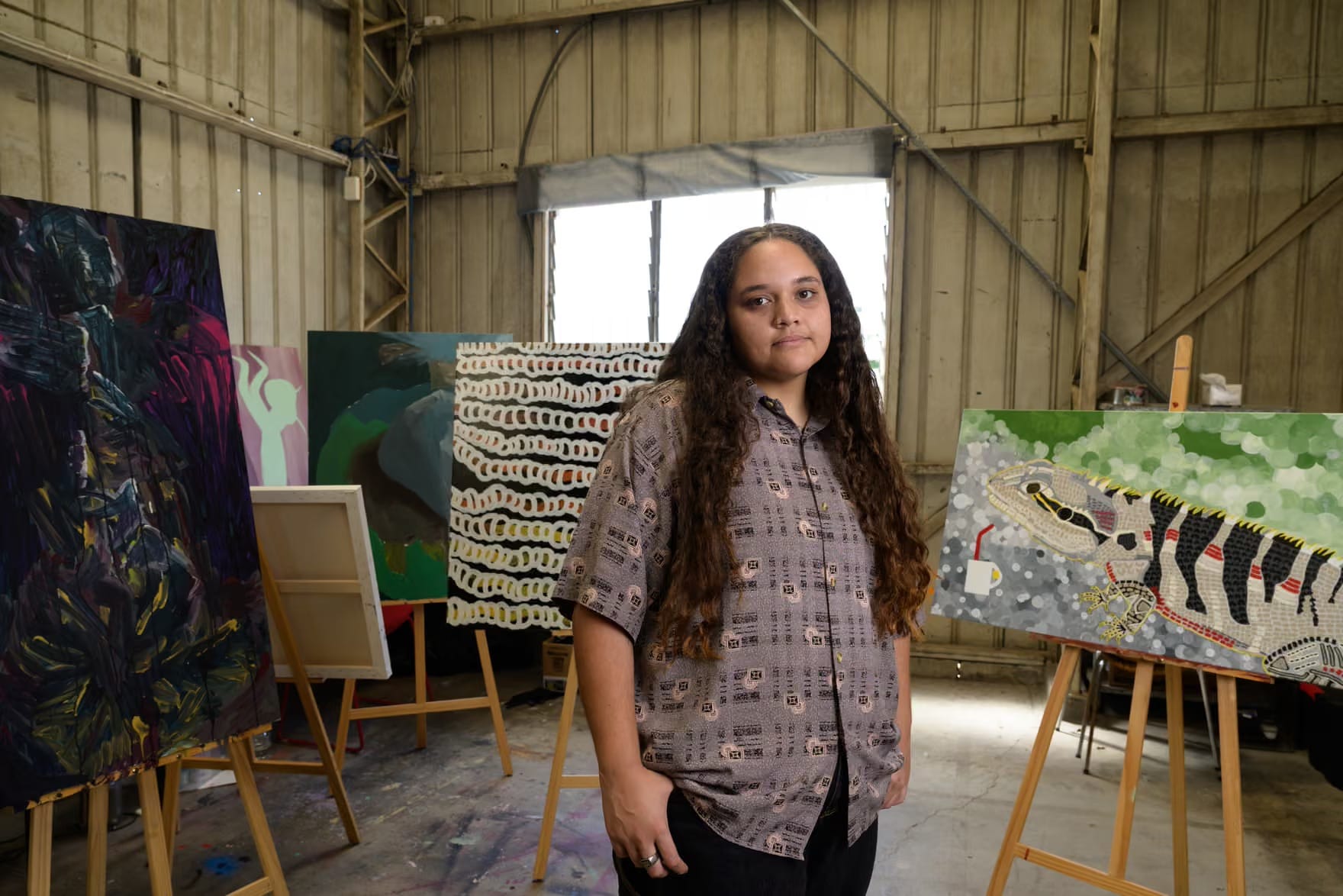
In 2026, both have returned. Birrunga has been joined by five First Nations artists represented by his gallery, who agreed to re-enter after deciding that continued absence risked removing their voices from the conversation altogether.
Their response centres on what Birrunga calls "ancestral integrity", deliberately setting another AI against artificial intelligence. The idea is grounded in knowledge, culture, and artistic practices carried across generations, qualities the participating artists argue cannot be generated through software.
Among the finalists are Gunggari and Kabi Kabi artist Kane Brunjes with Ancestral Integrity and Kamilaroi artist Elysia Love-Anderson with Reflections. For Love-Anderson, the issue is closely tied to the origins of her work. Knowledge inherited through family and Elders cannot be reproduced by a program, regardless of how convincingly it can imitate a visual style.
The concern also extends to Indigenous cultural and intellectual property. Birrunga has argued that permitting generative AI creates risks for cultural material that may be absorbed and reproduced without the relationships, permissions, or knowledge that govern its use.
The Brisbane Portrait Prize takes a different position. Director Anna Reynolds has said generative AI entries are accepted when they do not infringe copyright, with an emphasis on artists retaining human creative control. Reynolds believes that AI can operate as another creative tool when its use is disclosed and directed by the artist.
This year will offer a particularly contained test of this policy. Of 49 works in the main competition, only one declares the use of generative AI. Jackie Ryan's, The Catch, combines a photograph of comedian Alice Fraser with imagery created using Krea. Fraser appears inside a claw machine surrounded by synthetic female figures drawn from familiar pop-cultural stereotypes. Ryan developed the image through repeated prompts and revisions, directing the software to alter its figures, composition, and visual treatment.
Her process complicates a clean division between human-made and machine-made work. There is still a photographer, a subject, an idea, and a series of creative decisions behind the final image. For critics of generative AI, however, human direction does not resolve broader concerns about how these systems are trained or what is lost when image-making is delegated to them.
Hunt's return approaches the issue from another direction. His finalist depicts Dean Clifford, who lives with epidermolysis bullosa. Clifford's appearance was previously mischaracterised by Meta AI as a "zombie costume", while people encountering an image of him online reportedly questioned whether he was AI generated.
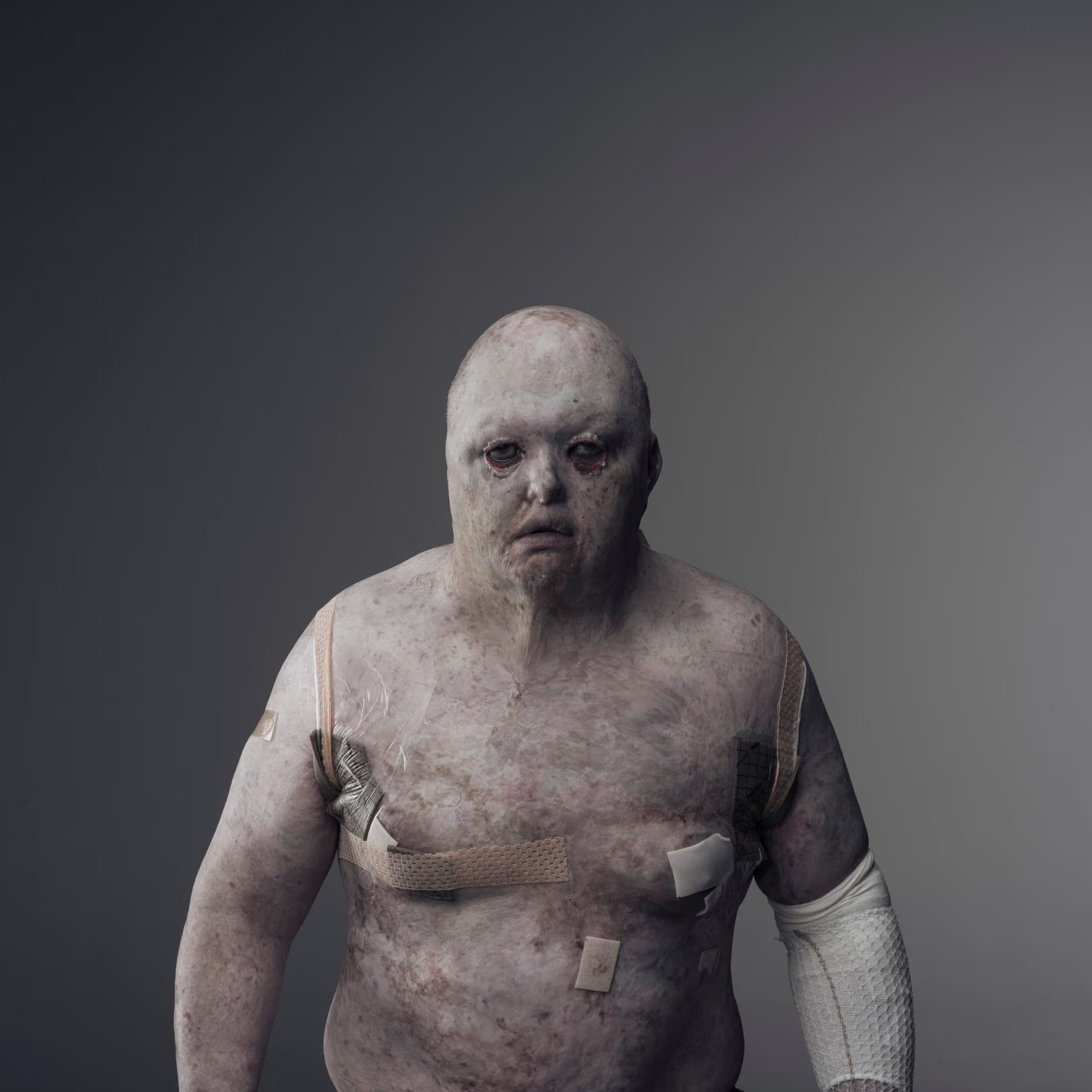
In the context of a portrait prize, the incident carries particular force. Generative AI has altered the conditions in which photographs are viewed. Audiences increasingly encounter images with an additional uncertainty. They have to consider what the image represents, as well as whether the person or scene represented exists at all.
That makes the Brisbane Portrait Prize dispute larger than the presence of a single AI-assisted finalist. Its policy remains in place, while artists who object to it have chosen to return and make their case through the work itself.
The 49:1 ratio does not settle the argument in either direction. It does, however, show how limited declared generative AI remains within this year's competition. At the same time, its inclusion has already changed the prize, prompting artists to reconsider authorship, cultural authority, and what portraiture can preserve about a person that a generated image cannot.
For artists who once stayed away, returning does not signal acceptance. It is a decision to contest the policy from inside the exhibition, placing the work they believe cannot reproduce directly on the same walls.