Table of Contents
Sydney-based artist Coen Young has spent the past decade developing an unconventional approach to painting, using silver nitrate to create reflective surfaces that distort surroundings. His latest exhibition, No End, at Melbourne Gallery 1301SW, continues this exploration into the material possibilities of painting, coinciding with his inclusion in the 2026 NGV Triennial.
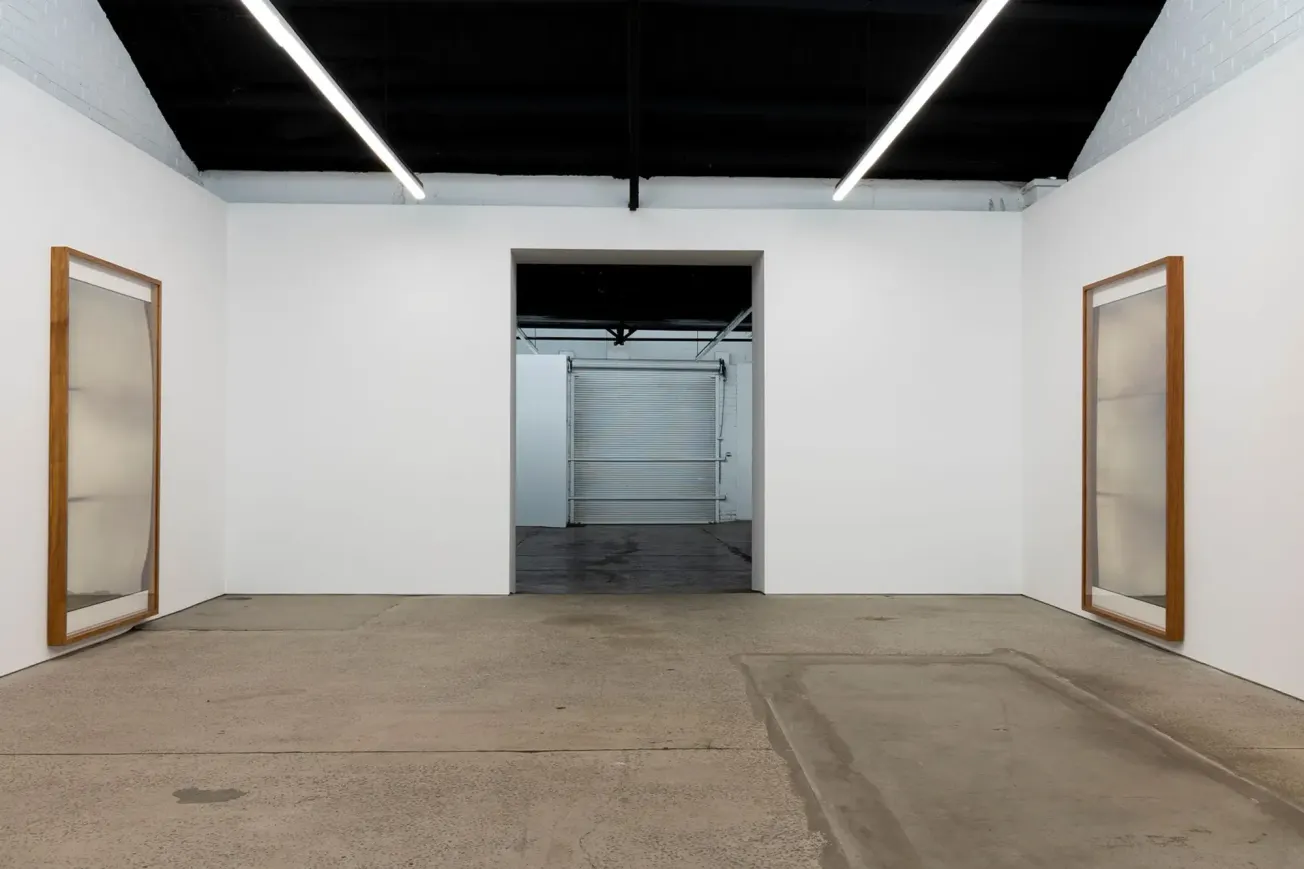
The exhibition marks Young's second presentation with 1301SW and brings together a new series of works that occupy an unusual position between painting and photography. Central to his practice is a chemical process associated with early photographic techniques and traditional mirror-making, through which silver nitrate contributes to the formation of reflective surfaces. The resulting works retain the physical qualities of painting while incorporating the optical characteristics of a mirror.
Young's process involves extensive preparation of the painting's support, producing densely layered surfaces with distinctive marks and variations. These details become part of the reflective image, complicating the relationship between the physical object and what it appears within it. As visitors approach the works, their reflections enter compositions already shaped by the artist's treatment of the surface.
This interaction is central to Young's exploration of abstraction. Unlike conventional mirrors, which are designed to reproduce a recognisable image, his paintings interrupt that clarity through their material textures and distortions. The surrounding gallery and the people occupying it becomes visible within the work, creating an image that changes according to the viewer's position.
Young's sustained interest in these processes also looks at how images are constructed and interpreted. His paintings draw on techniques associated with different periods of image-making, bringing the chemical foundations of early photography into conversation with contemporary approaches to abstraction.
No End arrives ahead of the NGV Triennial, opening in early December at NGV International, where Young will be among the participating artists. His work has previously appeared in exhibitions at the Art Gallery of New South Wales and the Museum of Contemporary Art Australia, with his practice continuing to examine the relationship between materials, representation and the experience of looking.