Table of Contents
A life-size statue of Florida Governor, Ron DeSantis, began melting under the Tallahassee sun on 13 October, its silver surface slowly dissolving to expose a skull beneath. While on first glance visitors may believe it to be a mistake, this transformation was deliberate. Cast in a metal with an unusually low melting point, the sculpture used the city's heat to stage a public demonstration about climate change and the political decisions surrounding it.
Titled 'DENIAL', the installation was developed by environmental advocacy organisation 350 Action in collaboration with Uncommon Creative Studio and production company M ss ng P eces. Its central material, gallium, melts at approximately 29.8˚C, a temperature regularly exceeded during Florida's summer months. The artists used 3D scanning and printing to produce a detailed likeness of DeSantis before casting the figure in metal, allowing the surrounding temperature to determine how quickly its appearance deteriorated.
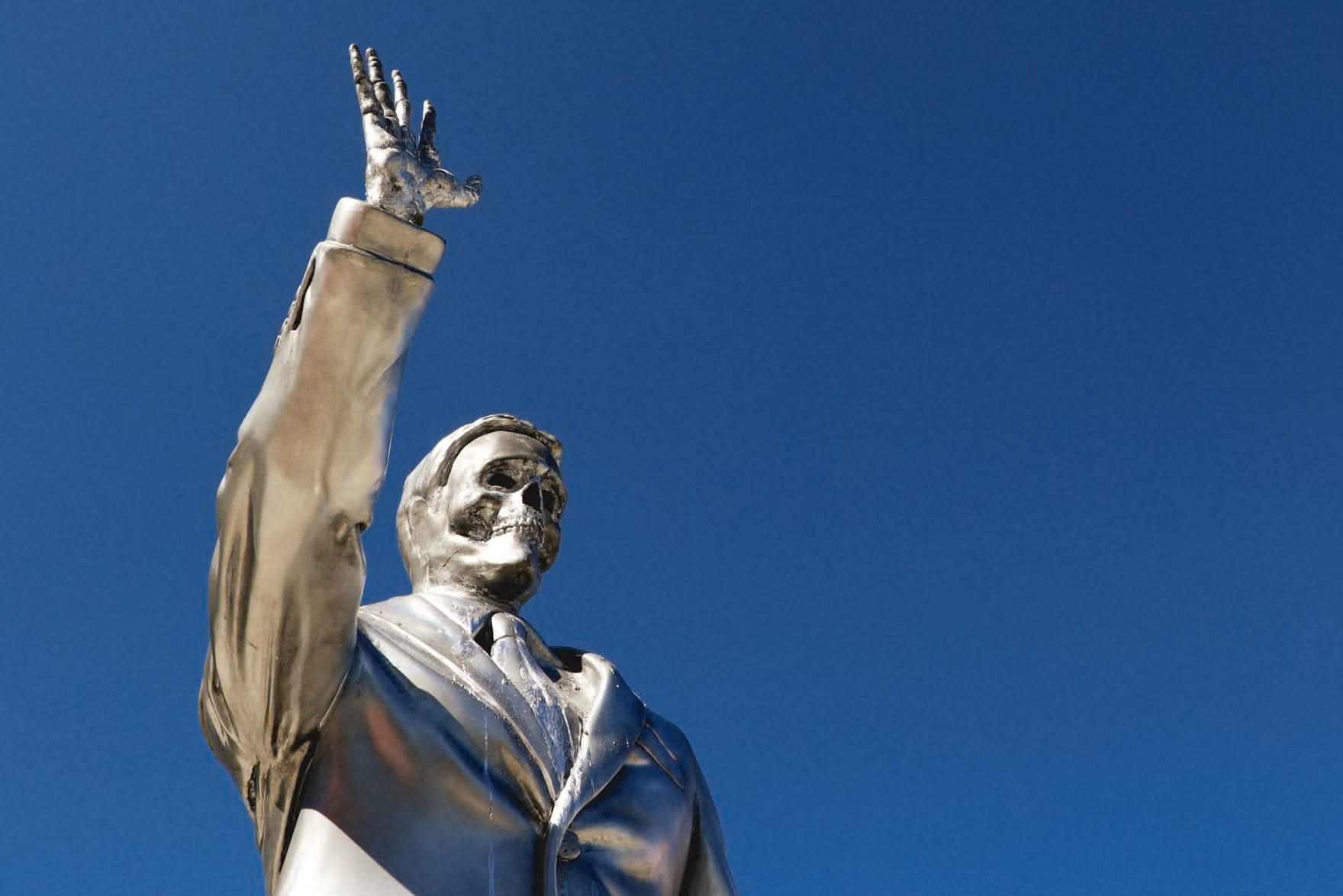
The choice of material was central to the work's meaning. Gallium's physical properties made the sculpture temporary by design, with the gradual disappearance of the governor's face exposing the skeletal structure underneath. The result was a public artwork whose appearance changed visibly in response to its environment, using a chemical property to communicate argument.
The installation directly challenged DeSantis's record on climate policy during his eight years as Florida governor. In 2024, he signed House Bill 1645, legislation that removed references to climate change from parts of Florida's state energy policy, repealed several renewable energy provisions and restricted offshore ind development. DeSantis defended the legislation as a rejection of what he described as a radical environmental agenda, arguing that Florida should prioritise energy reliability and affordability.
Those policy decisions have attracted criticism from environmental organisations concerned about Florida's vulnerability to rising temperatures, coastal flooding, and severe storms. The state faces substantial exposure to sea-level rise, while hurricane damage and increasing insurance costs have placed growing pressure on residents. Although DeSantis has supported conservation and environmental resilience initiatives during his governorship, his administration's approach to emissions reduction has remained a point of contention.
The timing of DENIAL was equally deliberate. Unveiled ahead of the November 2026 midterm elections, the sculpture formed a part of 350 Action's campaign encouraging public engagement with candidates' climate policies. Its presentation combined the visual language of public monuments with the direct messaging of political advertising, raising and interesting question about the relationship between artistic expression and organised activism.
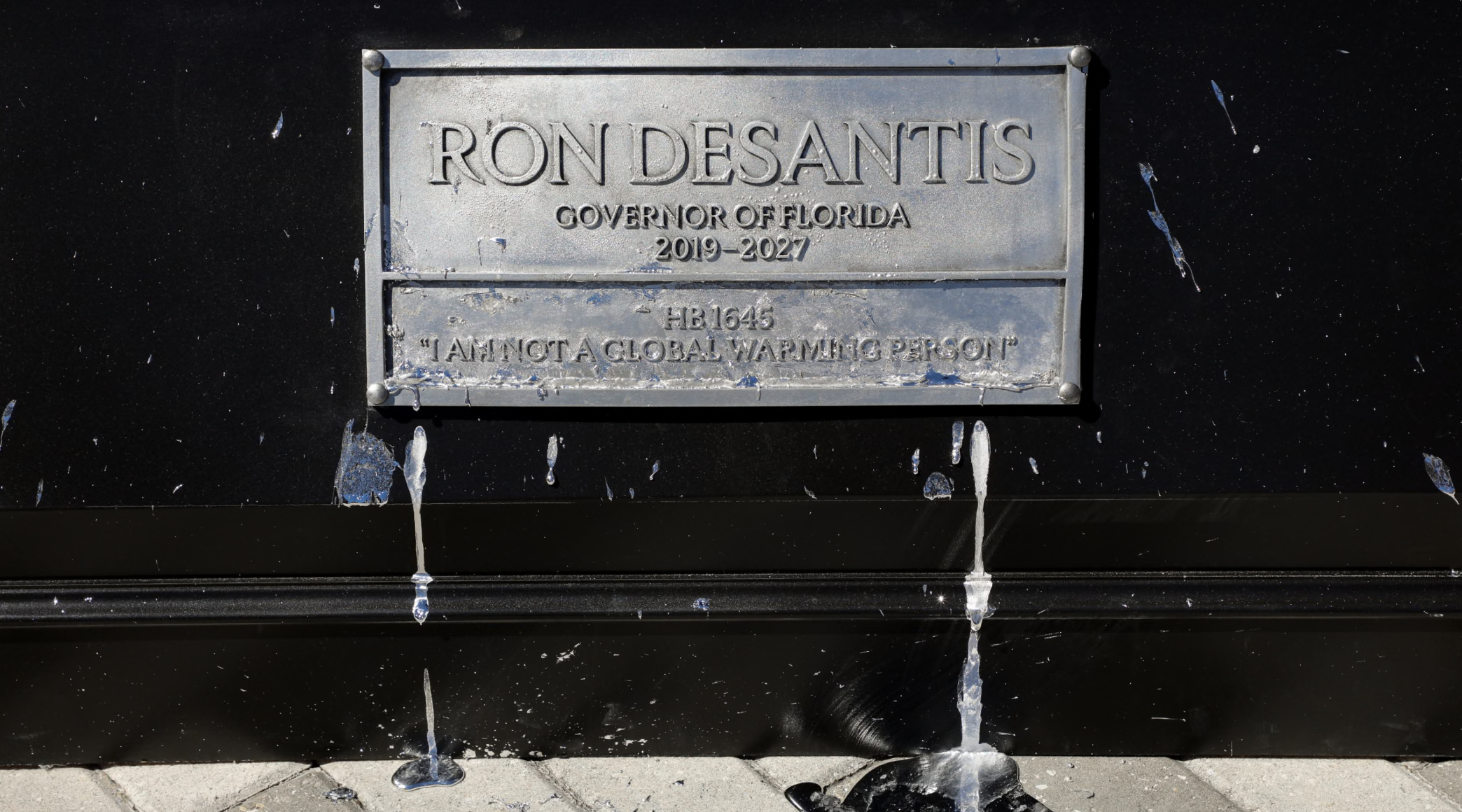
Traditionally, public statues commemorate individuals through materials chosen for their durability. DENIAL adopted the familiar form of a political monument while making its destruction the central event. The spectacle was brief, but its design ensured that the melting process could be photographed, filmed, and circulated beyond Tallahassee.
There is also a scientific distinction worth recognising. Gallium melting on a hot day demonstrates the metal's response to temperature. A single warm afternoon cannot establish a long-term climate trend. The installation's argument depends on the broader evidence of rising global temperatures and Florida's exposure to climate-related hazards.
An exercise in politically engaged public art, DENIAL demonstrates how the physical behaviour of a material can become part of an artwork's message. Its creators transformed a familiar scientific property into a highly visible protest, using the disappearance of a political likeness to draw attention to an environmental debate that will continue long after the sculpture itself has vanished.