Table of Contents
A new sculpture in Ballarat's Intercultural Gardens draws attention to a history embedded in the city since the gold rush, connecting the experiences of Chinese migrants in the 19th century with the contemporary ideas of home and belonging.
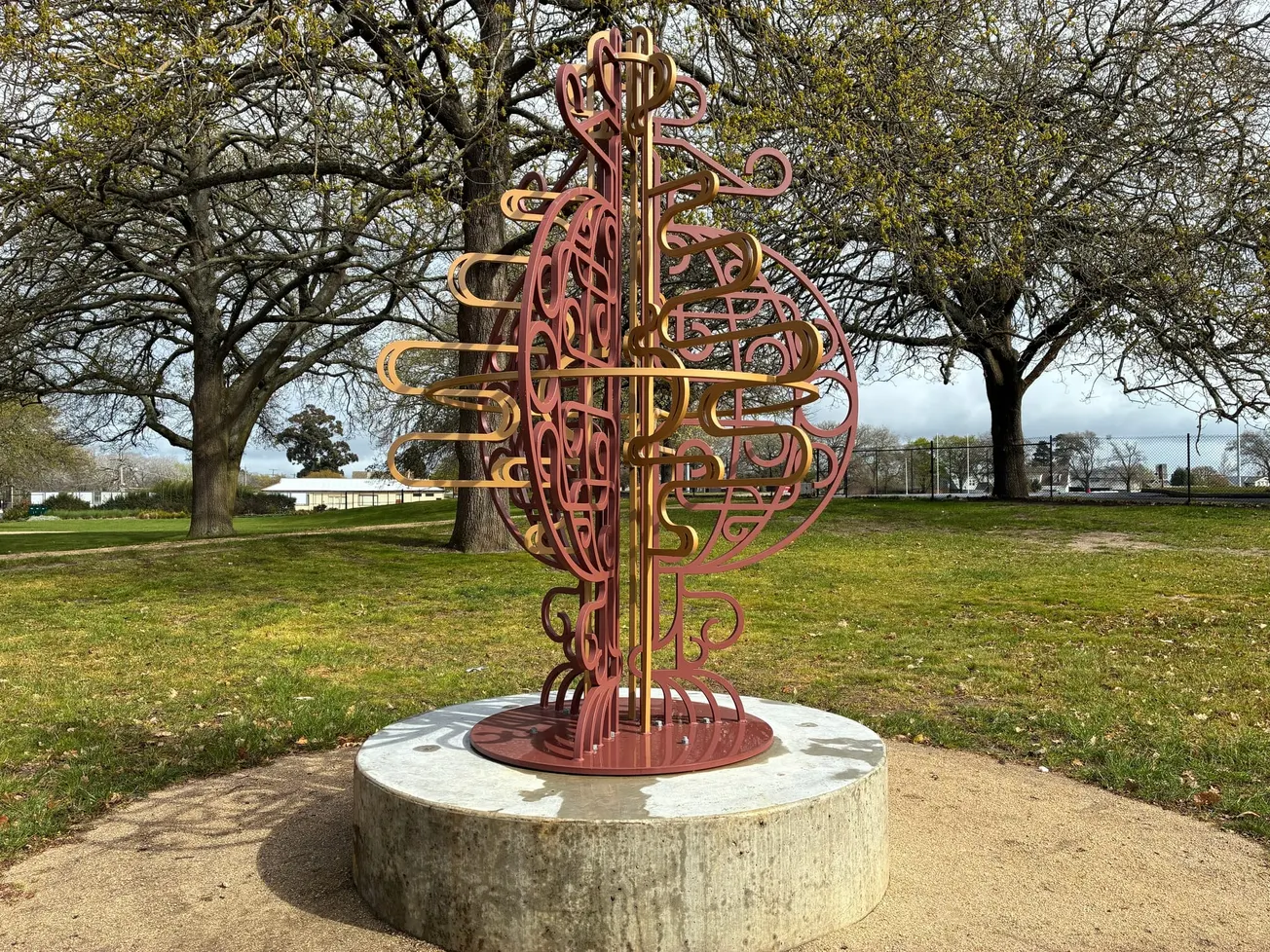
Myriad of Lights 万家灯火, by Melbourne-based artist, architect, and educator Jingwen (Jina) He, was officially unveiled on the 21st of September 2026, as the latest commission for the City of Ballarat's Empty Plinth Project. Inspired by Southern Chinese flower lanterns (花灯), its layered red-and-gold steel structure brings a familiar cultural form into a contemporary public setting.
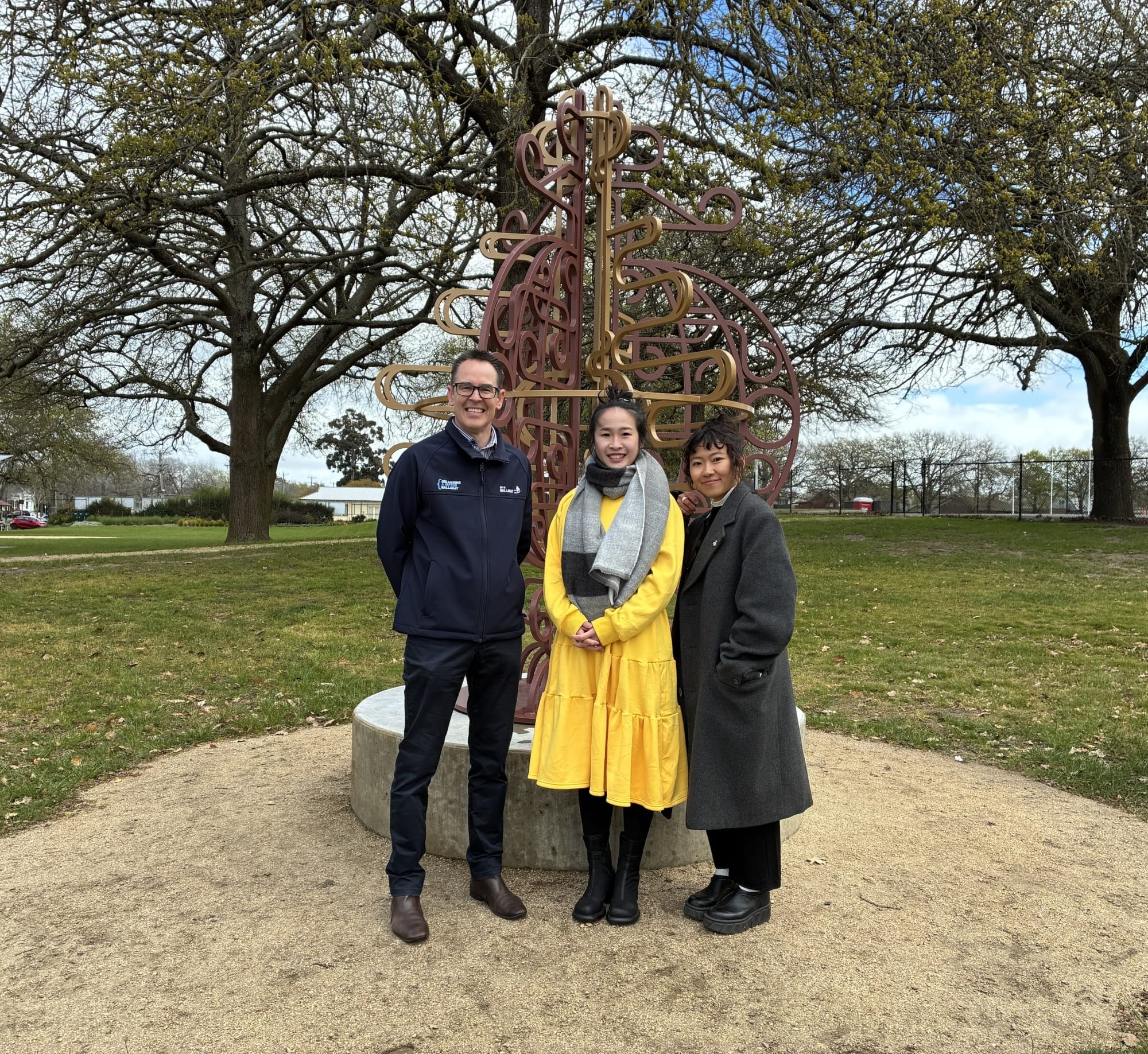
Its title evokes the sight of countless lights glowing from homes at night. Within the work, the image carries an idea of a collective identity. It draws on individual homes, families, and experiences existing alongside one another and becoming part of a larger place.
This idea resonates deeply with the city of Ballarat. Chinese miners and settlers formed and important part of the population that arrived in the region during the gold rush, and their experiences sit within a complicated history of migration, settlement, and belonging. He developed the sculpture through consultation and conversations with members of Ballarat's Chinese community, considering both this history and the ways migration continues to shape the city today.
The resulting work does not attempt to recreate a historical lantern. Its steel frames form an open structure that changes according to where the viewer stands. The garden remains visible between each layer, while sunlight creates shifting patterns of light and shadow across the sculpture and its surroundings. He's architectural practice is evident in this relationship between structure and space, with the work relying on movement and perspective as much as its physical form.
It unveiling also falls around the Chinese Mid-Autumn Festival, when lanterns, family gatherings, and ideas of reunion carry particular cultural significance. The timing gives another dimension to the title, Myriad of Lights. It represents a field of illuminated homes becoming an image of people connected across families, places, and generations.
The sculpture has been commissioned through the Ballarat Empty Plinth Project, an annual initiative run by the City of Ballarat with Multicultural Arts Victoria as part of the city's Temporary Public Art Program. Each year, an artist is invited to create a temporary, site-responsive sculpture for the Intercultural Gardens, with commissions addressing subjects including space, ecology, identity, and belonging.
The rotating plinth creates an unusual model for civic public art. Instead of fixing a single narrative permanently to the site, it gives successive artists an opportunity to respond to Ballarat and the communities that live there. The temporary format can bring histories into public view that may sit outside the stories traditionally represented by monuments and permanent civic sculptures.
Having this context to understand Myriad of Lights is important. Chinese migration is inseparable from the history of the Victorian goldfields, but He's sculpture avoids treating it solely as a historical subject. Its development through conversations with contemporary Chinese communities connects those earlier experiences with people living in Ballarat now.
The work consequently sits between the present and the past. Its lantern form carries a recognisable cultural history, while its open construction allows contemporary Ballarat to remain visible through it. People, landscape, and architecture continually appear between its steel frames.
For the year it occupies the plinth, Myriad of Lights gives Chinese migration a visible place within Ballarat's public landscape. The sculpture acknowledges those who helped shape the city during the gold rush while recognising that migration and cultural exchange remain part of Ballarat's identity today.