Table of Contents
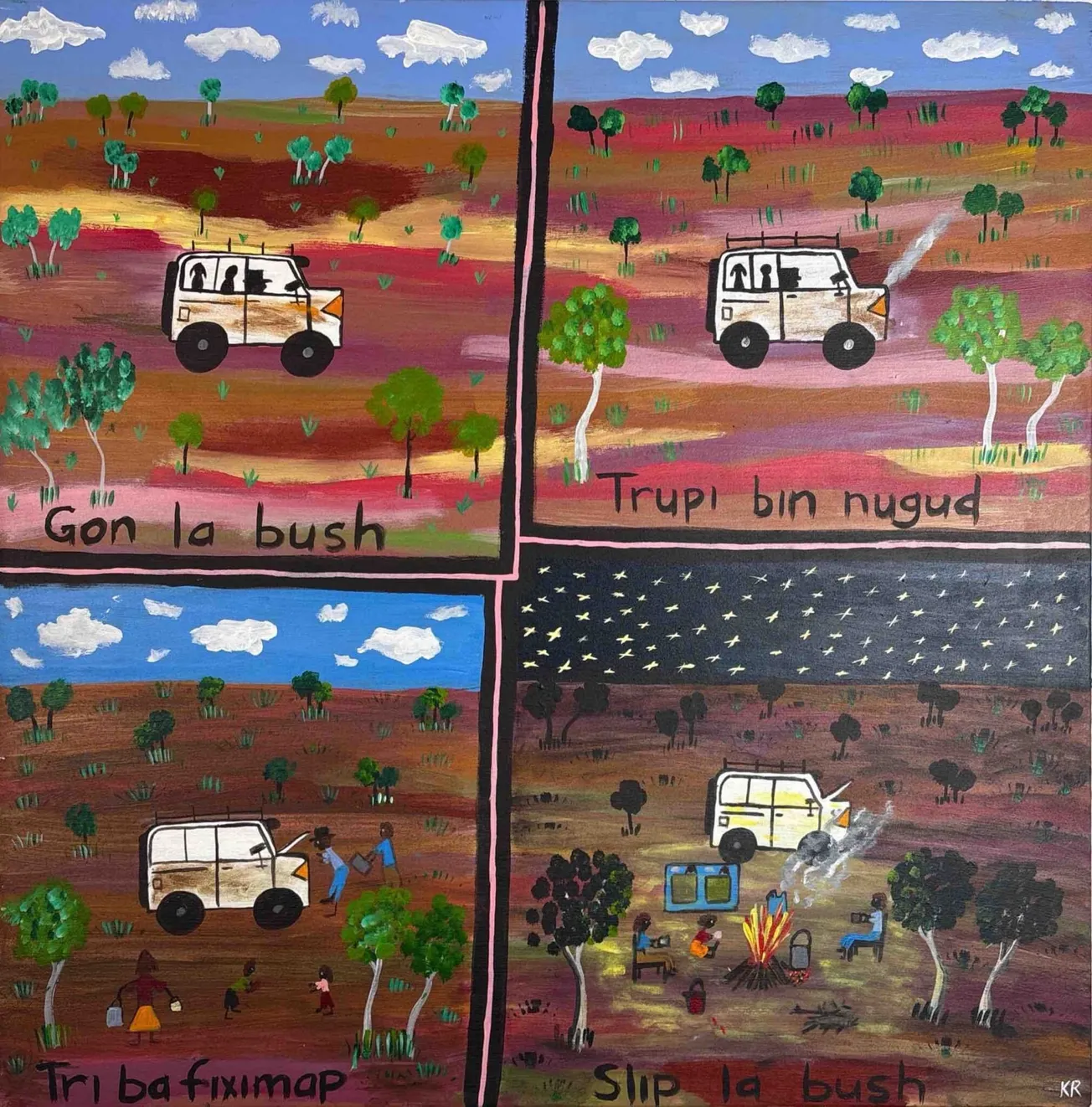
A Toyota LandCruiser might not be the first thing people expect to see in a piece of Aboriginal artwork. However, at the 2026 National Indigenous Art Fair, it became one of the exhibition's most memorable subjects.
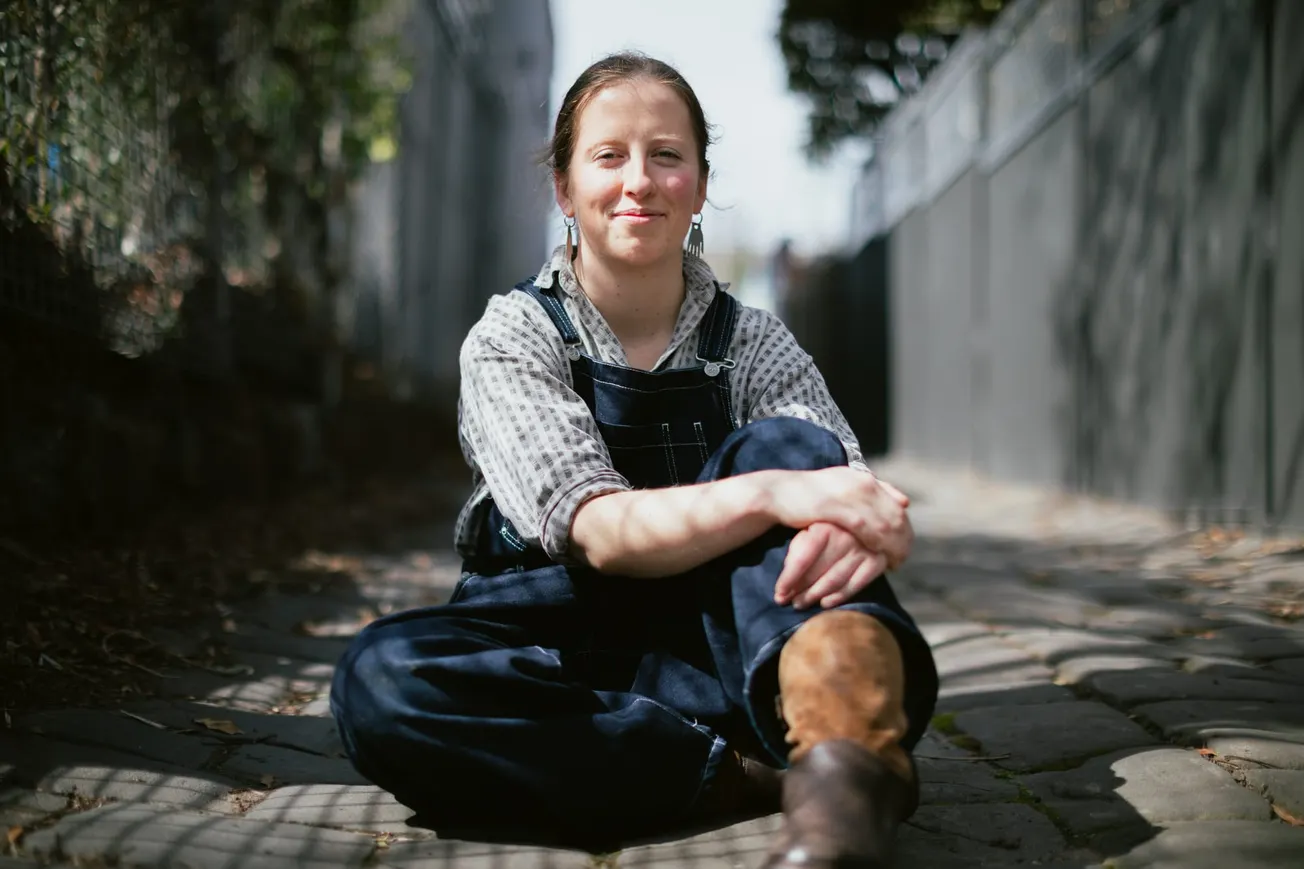
Ngalakgan artist drew crowds with paintings of Toyota vehicles travelling across Country, rendered in a style that sits comfortable alongside the visual traditions associated with Aboriginal art. On first glance, the combination may have annoyed some. Yet the outcome felt more familiar than one would expect. The pieces challenged common assumptions about what Indigenous art is "supposed" to look like.
The Seventh National Indigenous Art Fair, held this year in Sydney's newly transformed Cutaway at Barangaroo, celebrated artists from communities across Australia. Rogers' work stood out amongst others as it captured something that resonates deeply with Australian culture: the reality of life on Country today.
For many, the Aboriginal style is still viewed through a narrow lens. They expect to see traditional stores, symbols, and untouched landscapes. Modern objects can seem out of place, as though they somehow weaken connection to culture. But, that particular way of thinking misses an important point.
When has a culture ever stayed still? Never. It constantly evolves, grows, and responds to the world around it while remaining grounded in identity, knowledge, and connection to Country.
In many remote communities, a Toyota Landcruiser is a symbol of connection, movement, and belonging. It's a way families travel around to significant places, visit Elders, attend ceremonies, and maintain relationships with Country across vast distances. The vehicle has become part of everyday life, and naturally, part of the stories people like Rogers choose to tell through art.
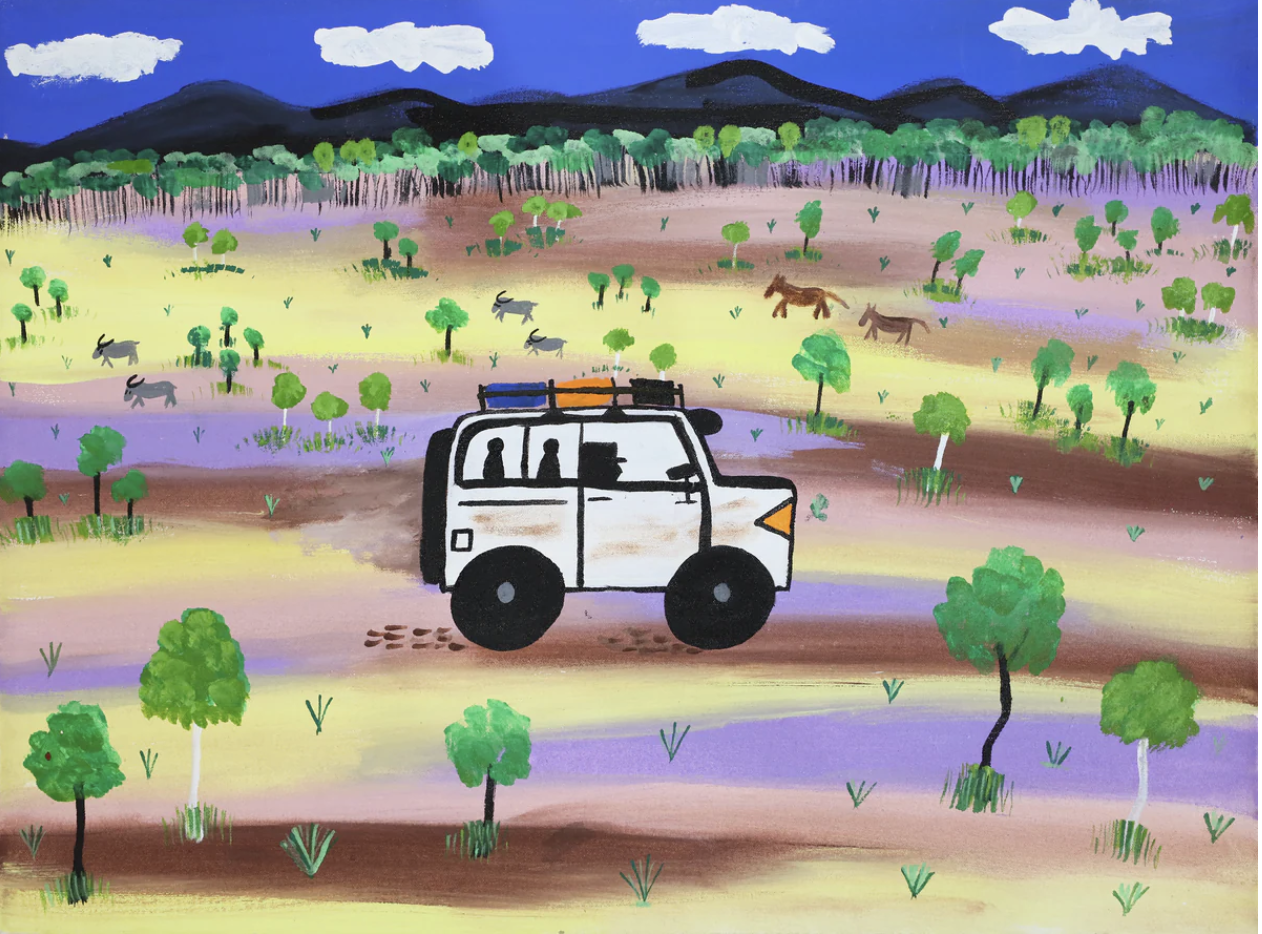
Her artwork doesn't necessarily have to replace tradition with modern life though. Instead, it is a way of showing how both past and present can coexist. This perspective offers an important lesson for educators.
Too often, classroom activities present Aboriginal art as something frozen in time. Students are encouraged to recreate familiar motifs without exploring the deeper idea that culture continues to evolve. The result can unintentionally reduce a living artistic tradition to a collection of recognisable symbols.
Rather than asking students to imitate traditional styles, educators could encourage them to think about the everyday objects that carry meaning in their own lives. What ordinary things connect them to their family, favourite places, or communities? It might be a bicycle, train line, fishing boat, or the kitchen table where generations gather together. While simple, they all may hold powerful stories.
The success of Rogers' work at NIAF 2026 reminds us that authenticity is not about rejecting the present. It's about telling the true stories that reflect lived experiences. Contemporary Indigenous artists continue to honour culture while speaking the language of today, and that is precisely what keeps these traditions alive.