Table of Contents
In 2023, Machester Museum returned 174 cultural heritage items to the Warnindilyakwa people of Groote Eylandt in Australia's Northern Territory. Among them were Dadikwakwa-kwa, handmade shell dolls with connections to kinship, fertility, Country, and the transmission of cultural knowledge. Three years later, some of these dolls have crossed the ocean again.
They are now in Venice as part of Tide of Returns, an exhibition at TBA21-Academy's Ocean Space that considers a question increasingly relevant to museums around the world: what happens after an object is repatriated?
Curated by Khadija von Zinnenburg Carroll and based on research of the international Repatriates Collective, the exhibition arrives as museums across Europe face sustained pressure to return objects acquired through colonial occupation, violence, and unequal systems of exchange. Recent cases have involved some of the world's most contested cultural material, including the Benin Bronzes, but Tide of Returns concentrates much of its attention on smaller objects and the relationships attached to them.
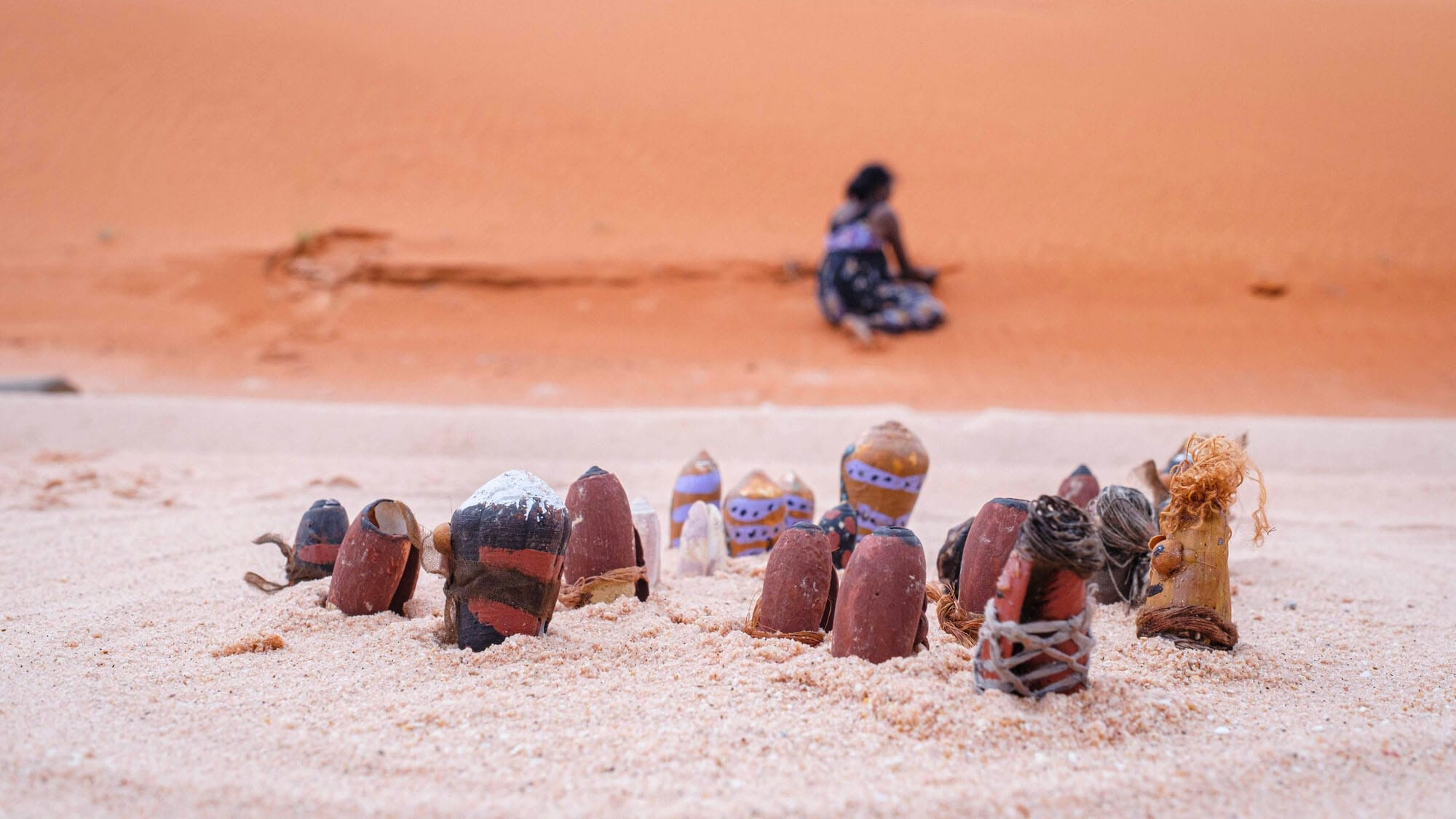
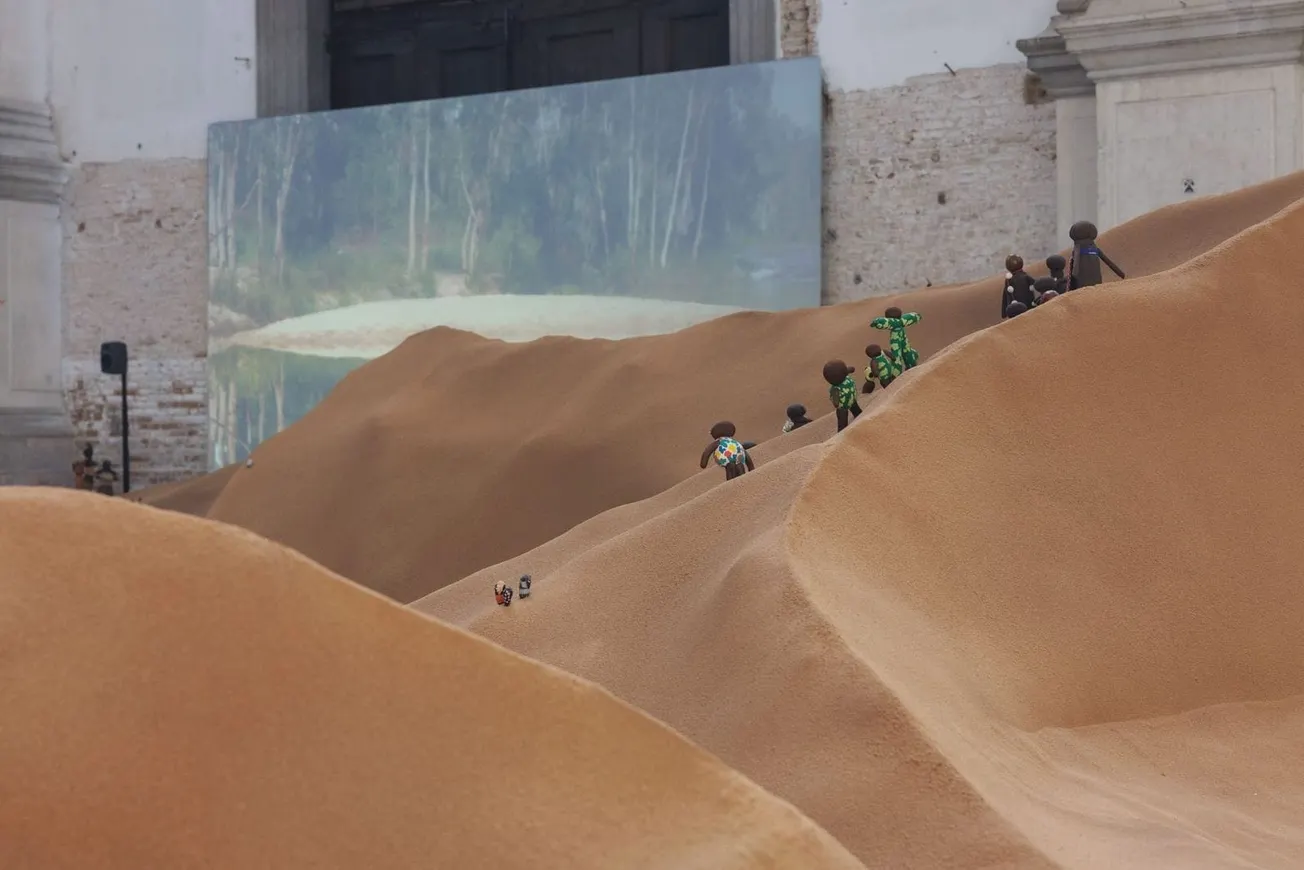
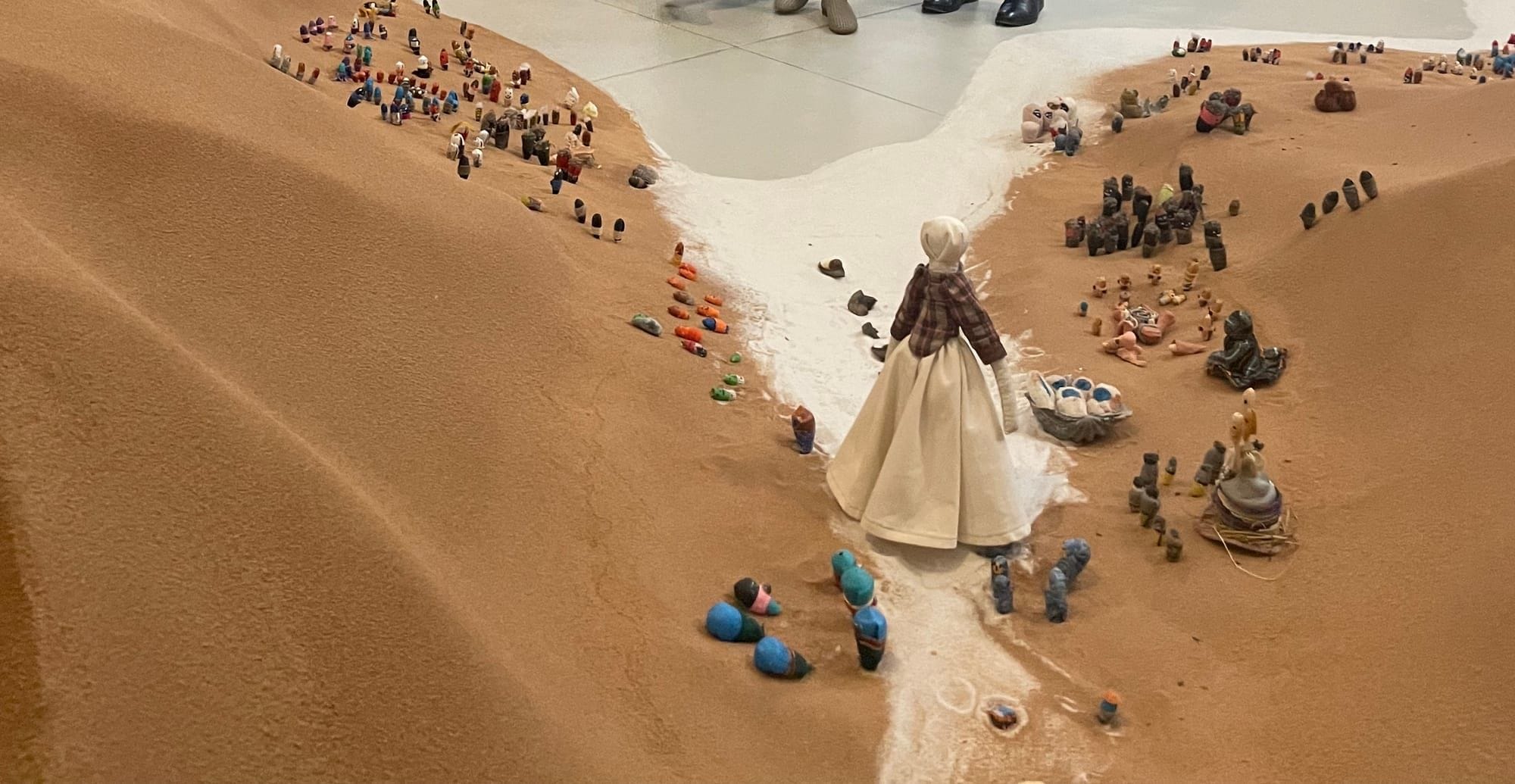
Its central installation, From My Mother's Country, fills part of Venice's former Church of San Lorenzo with ochre sand, film, sound, and thousands of small figures made from shell and fabric. Some of the sand was brought from Anindilyakwa artist Noeleen Lalara's Country in the Gulf of Carpentaria. Across its surface sits the Dadikwakwa-kwa, including old dolls returned by Manchester Museum and thousands of new figures made for the exhibition.
Their presence in Venice introduces an important complication. After decades in a British museum, why bring returned cultural material back to Europe?
The answer partly lies in who determines the terms of their journey. A film accompanying the installation follows Anindilyakwa women preparing and redressing the Dadikwakwa-kwa, including dressing them in Namibian fabrics. Elders bless the dolls before their departure. The journey to Venice is therefore markedly different from the historical processes that placed Indigenous cultural material in European collections. Movement itself is not the issue, authority over that movement is.
That distinction gives Tide of Returns much of its strength. Repatriation is often discussed through the moment of transfer. An institution agrees to a return, an object changes hands and a historical wrong appears, at least administratively, to have been addressed. For communities receiving cultural material, however, return can begin another process involving memory, ceremony, knowledge, and relationships interrupted during the period of removal.
The exhibition also connects those histories to environmental damage. Lalara's Country in the Gulf of Carpentaria receives ghost nets carries ashore by ocean currents, discarded fishing equipment that can entangle and kill marine life. In From My Mother's Country, land affected by contemporary global industry sits alongside objects shaped by another history of extraction. The connection is broad, but effective. Colonial collecting did not occur independently of systems that treated distant lands, resources, and cultures as available for European use.
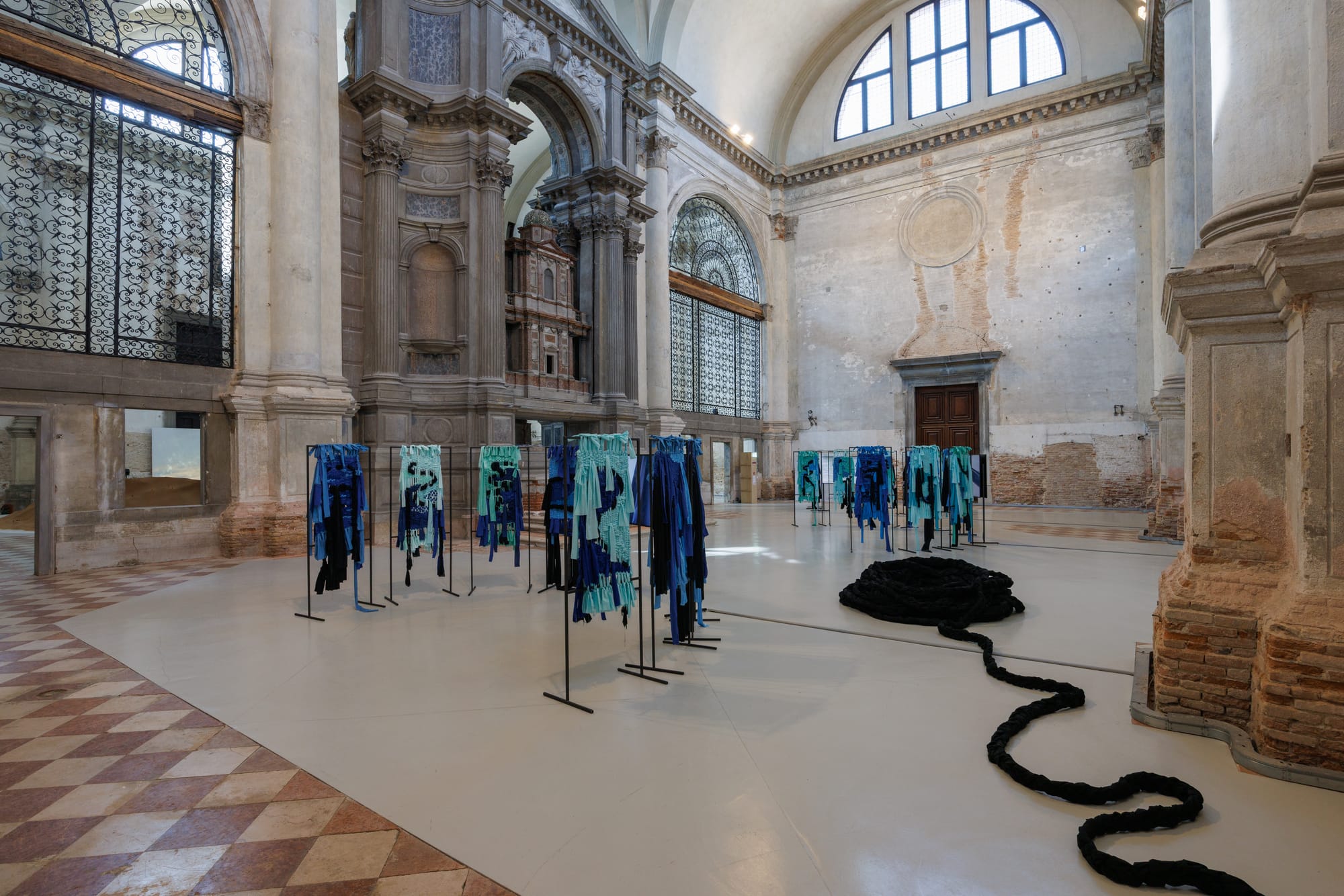
Across the church, German-Bolivian artist Verena Melgarejo Weinandt approaches the subject through Weaving Connection. The piece incorporates blue textiles, black fabric braids, and a three-channel video to draw on her research into the representation of Indigenous people in German popular culture. Performers prepare, braid, and wash textiles in water, while the work considers how colonial stereotypes can persist long after formal colonial rule has ended.
This part of the exhibition complicates the idea that returning an object can, by itself, settle the relationship between a museum and the community from which it originated from. Museums don't only hold material things, they have also produced categories, descriptions, and narratives around the people those things represent. Returning a collection leaves those histories behind to be confronted.
That is ultimately where Tide of Returns makes its case. The growing number of restitutions from European collections matters, particularly after decades of resistance from institutions that once treated permanent possession as a given. But the handover cannot carry the entire burden of repair.
The Dadikwakwa-kwa have travelled an extraordinary route. Removed from their community, held in Manchester, returned to Groote Eylandt, and not brought to Venice under profoundly different conditions. Their journey makes the meaning of return harder, and more useful, than a simple reversal of the original voyage. Coming home matters, so does what becomes possible afterwards.
Tide of Returns is on view at Ocean Space, Chiesa di San Lorenzo, Venice, until 11 October 2026.